

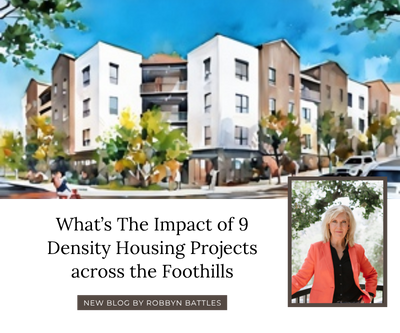
Across our Foothill communities, nine major projects will add 485 long term housing units and 16 short term suites, reshaping the corridor far more quickly than our current infrastructure can adapt. These developments stretch from La Canada through Montrose and La Crescenta and into Sunland Tujunga, creating a wave of density in areas where every evacuation route is already limited and highly vulnerable during any major incident.
This total does not include the 221 single family homes proposed for the Canyon Hills subdivision at 8100 La Tuna Canyon Road, a long standing project located deep inside a Very High Fire Hazard Severity Zone. Together, these changes represent a significant shift for our foothill neighborhoods.
While these projects differ in size and purpose, they all converge on the same critical lifeline, Foothill Boulevard. Every neighborhood in our foothill communities ultimately depends on this corridor during a fast moving wildfire. At the same time, the City of Glendale is advancing lane reduction plans on La Crescenta Avenue and Verdugo Road, two of the few evacuation routes that already face daily bottlenecks from school traffic and commercial activity. When dense construction continues inside Very High Fire Hazard Severity Zones without matching improvements to escape routes, it creates a practical and unavoidable public safety concern for anyone living or commuting along the corridor.
The images from the Palisades Fire, where bulldozers had to push abandoned cars off the road so firefighters could reach trapped neighborhoods, are not distant history, they are a cautionary reminder of what can happen when thousands of people attempt to evacuate through narrowed corridors with no alternative routes.
This overview is meant to help residents understand what is being planned, where these projects are located, and how they may collectively affect safety, traffic, and the flow of daily life along our Foothill corridor.
Across the Foothill communities, there are nine major multifamily housing projects currently approved, under review, or under construction, not including the Canyon Hills subdivision in Tujunga. These nine projects total 485 long term apartments, plus 16 short term suites, for a combined total of 501 new dwellings along La Canada, Montrose, La Crescenta, and Sunland Tujunga.
To help residents understand what this means, it helps to look beyond the unit count and consider actual population impact. Several of these projects include large numbers of two and three bedroom units, allowing us to calculate realistic occupancy ranges for the buildings where bedroom counts are known.
Using state occupancy guidelines for the projects with full unit mixes available, including 2817 Montrose, 2413 Foothill and Briggs, 3950 Foothill, and 7937 through 7945 Foothill, we can determine a reliable average occupancy rate between three and four residents per unit. These buildings include many larger, family oriented units, which significantly increases the number of people per household.
If we apply that same range to all 485 long term units, the nine Foothill and Honolulu projects together can be expected to bring:
Low estimate, approximate 1,500 new residents
High estimate, approximate 2,000 new residents
This does not include the additional 16 short term suites at 600 Foothill, the 221 single family homes at the Canyon Hills subdivision on La Tuna Canyon Road, or future increases from classrooms, crosswalks, and traffic associated with the future expanding Chamlian Pre-School.
At the same time, the State’s density bonus laws promised that local jurisdictions would receive additional infrastructure support, funding for roads, fire response, utilities, and traffic management, to handle this kind of concentrated population growth. But the State has since told cities and counties to raise taxes locally for these upgrades instead, creating yet another paradox, local communities are being asked to absorb thousands of new residents without the matching infrastructure improvements originally promised.
Snapshots of the Nine Density Housing Projects
2817 Montrose Avenue, Glendale
- A four story SB 1818 apartment building with 42 units.
- Unit mix, 3 one bedroom units, 36 two bedroom units, and 3 three bedroom units.
- 5 affordable units, approximately 47,000 square feet, height approximately 52 feet.
- 69 parking spaces provided on site.
This project adds a moderate number of residents with a healthier parking ratio than newer projects, which may help limit spillover parking on nearby streets.
2413 Foothill Boulevard and 4521 Briggs Avenue, La Crescenta
- A five story, 100 percent affordable community developed by Abode Communities.
- 80 units, including 39 one bedroom units, 21 two bedroom units, and 20 three bedroom units.
- 25 units reserved for Transition Aged Youth, one on site manager unit.
- 80 semi subterranean parking spaces.
- Estimated population between 282 and 362 residents based on unit mix and standard occupancy.
This is the largest single population impact of the corridor and is located in a very high fire zone, making evacuation planning and on site services especially important.
2432 to 2434 Foothill Boulevard, La Crescenta
- An entitled multifamily site, recently taken off the market.
- 35 approved units on a 22,262 square foot lot.
- Unit mix and parking counts are not yet publicly available.
This is a dormant project that could reactivate at any time, adding more units to the corridor with little advance notice for neighbors.
3411 to 3427 Foothill Boulevard, Glendale
- A large mixed use project currently updated to 87 residential units.
- Ground floor commercial space, approximately 17,200 square feet, 4 to 5 stories tall.
- Previous estimates showed 208 parking spaces serving the site.
Located at a major intersection, this project will have a significant impact on traffic, turning movements, and access for nearby neighborhoods and businesses.
3950 Foothill Boulevard, Glendale
- An approved mixed use SB 1818 project that is Ready To Issue.
- 34 residential units, including 6 one bedroom units and 28 two bedroom units.
- 5 very low income units and 4,473 square feet of commercial space.
- 96 parking spaces, with a building height of 3 to 4 stories.
This is a well parked, moderate sized project with a lower risk of spillover parking, but it adds to congestion at an already busy intersection.
7577 Foothill Boulevard, Tujunga
- Former Denny’s site redeveloped into housing.
- 46 residential units, including 5 very low income units.
- Building height approximately 42 feet.
- 89 parking spaces on site.
This project adds units and traffic at a key location but maintains a relatively healthy parking ratio for residents and visitors.
7937 to 7945 Foothill Boulevard, Sunland
- A six story residential building, approximately 66 feet tall.
- 63 units, including 22 studios, 39 one bedroom units, and 2 two bedroom units.
- 30 on site parking spaces.
With a large number of units and limited parking, this project is likely to create some of the heaviest spillover parking and circulation impacts along the corridor.
600 Foothill Boulevard, La Canada Flintridge
- Builder’s Remedy mixed use project of approximately 180,000 square feet.
- 80 long term residential units plus 16 short term suites, with 13 percent of units designated as affordable.
- 7,287 square feet of commercial office space.
- Two levels of underground parking with a total of 192 spaces.
- Five story structure with pool, gym, and other resident amenities.
This is one of the largest individual projects on the corridor, but it also offers the strongest parking supply and a mix of residential, short term, and office uses in a single site.
2943 Honolulu Avenue, Glendale
- An 18,493 square foot affordable rental project currently under construction.
- 18 residential units in total.
- 23 space semi subterranean garage.
This is a smaller, lower impact project that still contributes needed affordable housing while keeping parking relatively comfortable.
Canyon Hills, Tujunga
- 221 single family homes planned in a Very High Fire Hazard Severity Zone.
- Detached homes with garages and driveways.
Although not a density bonus project, Canyon Hills represents a large long term addition of residents and vehicles to an already constrained fire and evacuation system.
Two Intersections, One Pattern of Evacuation Risk
Along the Foothill corridor, two intersections stand out as examples of how quickly a community can reach its limits when multiple high traffic uses land in the same confined areas. At Foothill and Lowell, the existing school campus, the planned preschool expansion, the well known In N Out traffic line, and the approved project at 3950 Foothill all converge where the roadway cannot be widened and where no infrastructure upgrades are planned.
The same pattern is now emerging at Foothill and Briggs. If the 80 unit project is approved and breaks ground, it will sit just south of the Sheriff’s Station, which already struggles to exit onto Foothill during congestion. Briggs is also the only feeder route for Upper Briggs Terrace, a one way in, one way out neighborhood. It carries daily traffic to Mountain Avenue Elementary and serves as the direct connection to Rosemont Middle School, the only middle school for the entire community. Vehicles traveling southbound on Briggs can only turn east or west onto Foothill, creating an immediate chokepoint in any emergency.
When you place these two intersections side by side, the concern becomes clear. Whether the emergency is a wildfire, an earthquake, a school incident, or a freeway shutdown that diverts traffic onto surface streets, both locations have the same vulnerabilities, multiple high demand uses stacked into narrow roadway grids with no room to expand and no planned improvements. Together, they form the perfect storm for an imminent evacuation disaster and delayed emergency response, a pattern the community cannot ignore.
Corridor wide impact summary
The concern for many residents is not simply the addition of new housing, but the concentration of large projects along a corridor where every north and southbound feeder road is already narrow and heavily used. Foothill Boulevard carries the weight of the entire region during daily traffic and during wildfire evacuations, and even small increases in volume can create major delays. When multiple large developments move forward at the same time, the strain on this limited network becomes more apparent.
That strain is most visible during emergencies. Emergency vehicles already struggle when traffic spills into residential streets, and parents attempting to reach nearby schools face the same limitations. In a foothill community where every neighborhood relies on the same few exit points, added density without matching improvements creates a real challenge for safe and timely evacuation.
Lane reductions on La Crescenta Avenue and Verdugo Road heighten this concern. Both serve as key evacuation routes, and these changes remove vehicle capacity in areas that already experience heavy congestion from schools and commercial activity. In a fire or earthquake, no one will be evacuating on a bike lane. Reducing lanes while adding residents increases the likelihood of gridlock when it matters most.
Bringing it all together
Viewed together, these projects signal a period of significant change for the Foothill corridor. Some developments bring affordable housing, some revitalize underused sites, and others add new commercial activity. For many, these are welcome improvements. For others, the pace and scale raise understandable questions. What matters most is that residents have a full and accurate picture of what is planned so they can form their own opinions based on facts, not fragments of information.
As this growth continues, the central issue is not whether housing should or should not be built, but how new development can be balanced with the evacuation, traffic, and infrastructure realities of a foothill community. Schools, small businesses, and established neighborhoods all rely on the same interconnected roads. This is a moment for residents to stay informed, ask informed questions, and encourage thoughtful planning that considers both the opportunities these projects bring and the challenges they create.
Keeping up with density housing, zoning changes, and long term planning is not easy, especially when you are focused on your own home, family, or retirement plans. I track these projects because they affect real people, real properties, and real decisions about when to move, when to stay, and how to protect long term value.
If you would like to talk through how these changes might affect your street, your neighborhood, or your plans to buy or sell, I am always happy to sit down, review the details, and help you make a well informed decision.
Helpful resources and project information
LA County Planning
City of Glendale Community Development
Abode Communities
600 Foothill Project Information
Cedar Street Partners
Riley Projects, 600 Foothill
La Canada Flintridge Housing Policy and Legal Matters
The House Agent website
Robbyn Battles on Google Business
Robbyn Battles on Zillow
Robbyn Battles, The House Agent, La Crescenta real estate, Montrose real estate, La Canada Flintridge real estate, Glendale real estate, Sunland Tujunga real estate, Foothill Boulevard housing, density housing projects, SB 1818 projects, builder’s remedy La Canada, 600 Foothill Boulevard, Abode Communities affordable housing, Cedar Street Partners, Riley Projects architecture, Canyon Hills subdivision Tujunga, very high fire hazard severity zone, Foothill corridor development, multifamily housing along Foothill, affordable housing in La Crescenta and Montrose, Transition Aged Youth housing, 2817 Montrose Avenue, 2413 Foothill and Briggs, 2432 Foothill Boulevard, 3411 Foothill Boulevard, 3950 Foothill Boulevard, 7577 Foothill Boulevard, 7937 Foothill Boulevard, 2943 Honolulu Avenue, La Tuna Canyon Road housing, Tujunga Canyon Boulevard traffic, evacuation routes, lane reductions on La Crescenta Avenue, lane reductions on Verdugo Road, vehicle miles traveled, VMT, LA County Board of Supervisors housing funding, City of Glendale planning applications, LA County Planning current projects, density bonus law, mixed income housing, short term suites, Foothill corridor traffic safety, wildfire evacuation planning.