

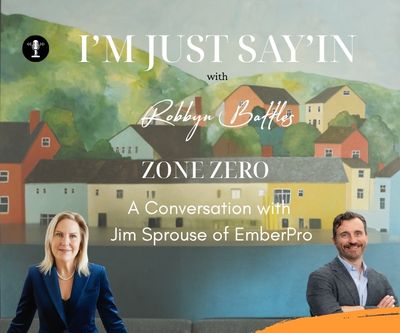
 What Homeowners Need to Know About Zone Zero, Insurance, and Wildfire Protection.
Zone Zero is becoming one of the most important wildfire topics California homeowners need to understand. It may affect insurance availability, property preparation, and even future real estate transactions. In this episode of I’m Just Sayin’, I sat down with wildfire mitigation specialist Jim Sprouse of EmberPro Wildfire Defense Systems to talk about what homeowners can do now and why waiting could become expensive.
Over the past year, I have had more conversations about insurance than I have in the previous decade. Buyers are worried about premiums. Homeowners are worried about keeping coverage. Sellers are wondering what insurance issues could mean when it is time to put their home on the market.
At the center of many of those conversations is a term more people are hearing: Zone Zero.
Because so many homeowners throughout La Crescenta, Montrose, Glendale, Pasadena, La Cañada Flintridge, and Sunland-Tujunga are asking questions about wildfire preparation and insurance, I invited Jim Sprouse of EmberPro Wildfire Defense Systems onto my podcast, I’m Just Sayin’, for a straightforward conversation about what is changing and what homeowners should know.
Here is a preview of our conversation:
Jim is an NFPA Certified Wildfire Mitigation Specialist who works with homeowners, communities, and real estate professionals on wildfire preparedness, home hardening, and risk reduction strategies.
Watch the full conversation here:
The Biggest Takeaway: Wildfire Preparation Is No Longer Optional
One theme came up again and again during our conversation. Insurance companies are evaluating wildfire risk differently than they did even a few years ago.
Homeowners who once assumed they would always have access to affordable coverage are discovering that insurers are paying closer attention to vegetation, defensible space, building materials, and overall property risk.
Jim explained that many homeowners focus on one improvement while overlooking several other vulnerabilities. A Class A roof may help, but if embers can still enter through vulnerable vents or ignite combustible materials near the home, the property may still be viewed as high risk.
What Is Zone Zero?
Zone Zero refers to the first five feet surrounding a home. The goal is to create a non-combustible area that helps prevent wind-driven embers from igniting the structure.
Although many homeowners have heard about defensible space, Zone Zero takes the conversation closer to the house itself. It focuses on the area immediately next to the home, where small details can make a big difference.
- Zone Zero: The first 5 feet surrounding the home.
- Zone One: Approximately 5 to 30 feet from the structure.
- Zone Two: The extended defensible-space area beyond that.
We will be publishing a separate in-depth guide dedicated entirely to Zone Zero requirements, timelines, and what homeowners should expect moving forward.
The Insurance Conversation Is Changing
As a real estate professional, this was one of the most important parts of the discussion.
Insurance used to be something buyers handled quietly in the background. Now, it can become one of the biggest surprises in escrow.
That comment stood out because it reflects what many homeowners and buyers are beginning to experience. Insurance is no longer a simple afterthought. In some cases, it can influence whether a transaction moves forward at all.
For sellers, that means wildfire preparation and property risk may become part of the conversation long before a home is listed.
What Surprised Me Most About EmberPro’s Approach
Like many homeowners, I assumed wildfire defense systems relied mainly on water. Jim explained why that assumption can be a problem during a major wildfire event.
When power outages occur or water infrastructure is compromised, traditional systems may not perform the way homeowners expect. EmberPro’s approach focuses on off-grid operation and long-term fire retardant application designed specifically for wildfire conditions.
Whether a homeowner ultimately chooses EmberPro or another solution, the bigger lesson was this: preparation needs to happen before a wildfire is approaching, not during one.
Why This Matters for Homeowners in Our Foothill Communities
Many of the communities I serve are located in or near high fire hazard severity zones. That includes neighborhoods throughout La Crescenta, Montrose, Glendale, Pasadena, La Cañada Flintridge, and Sunland-Tujunga.
The reality is that wildfire preparation, insurance availability, and property value are becoming increasingly connected. Homeowners who understand these issues early may have more options than those who wait until insurance challenges arise.
This conversation was not about fear. It was about understanding what is changing and learning how to prepare.
Listen to the Full Podcast Episode
If you would like to hear the complete discussion with Jim Sprouse, including wildfire mitigation strategies, home hardening recommendations, insurance challenges, and the future of Zone Zero, listen to the full episode below.
Coming Soon: The Complete Zone Zero Homeowner Guide
This podcast only scratched the surface. My next article will take a deeper look at Zone Zero, including what it is, who it affects, what changes homeowners may need to make, and how it could influence insurance and future real estate transactions throughout California.