

The best entrepreneurs I meet do not chase passion blindly. They spot a gap nobody else will fix and build the thing that fixes it. That distinction is exactly what made this conversation so much fun for me.
In this episode, I sit down with Caleb Christopher of Creative TC & Creative Title, a creative finance specialist who has founded three companies around closing the complex deals most professionals avoid.
We get into what it really takes to build a business, how subject-to and seller financing actually work, and the smart and not-so-smart ways people can put their home equity to work. This one is for the curious, the would-be entrepreneurs, and anyone sitting on equity who wants to understand their options.
Here’s a moment from our chat:
Catch the entire episode here:
Why I Had This Conversation
I love talking to entrepreneurs, and Caleb is one of those people who cannot stop building. He told me early on that what he does is not who he is; it is just the project he happens to be working on right now.
That mindset stuck with me. Caleb founded Creative TC for transaction consulting on creative finance real estate, then DOS Guard, and most recently Creative Title, a title company he started after raising roughly 320,000 dollars in seed capital. His background in corrections and cybersecurity gave him a risk-and-ethics lens most people in this space simply do not have.
I wanted to understand how someone moves so fluidly from idea to idea and still finishes what they start. What I got was a candid look at the difference between being good at a craft and being able to build a business around it.
“What I do isn’t who I am. It’s just what I’m working on right now as an entrepreneur. I have to say no to everything else to work on the one thing.” — Caleb Christopher
Why Passion Alone Does Not Make You an Entrepreneur
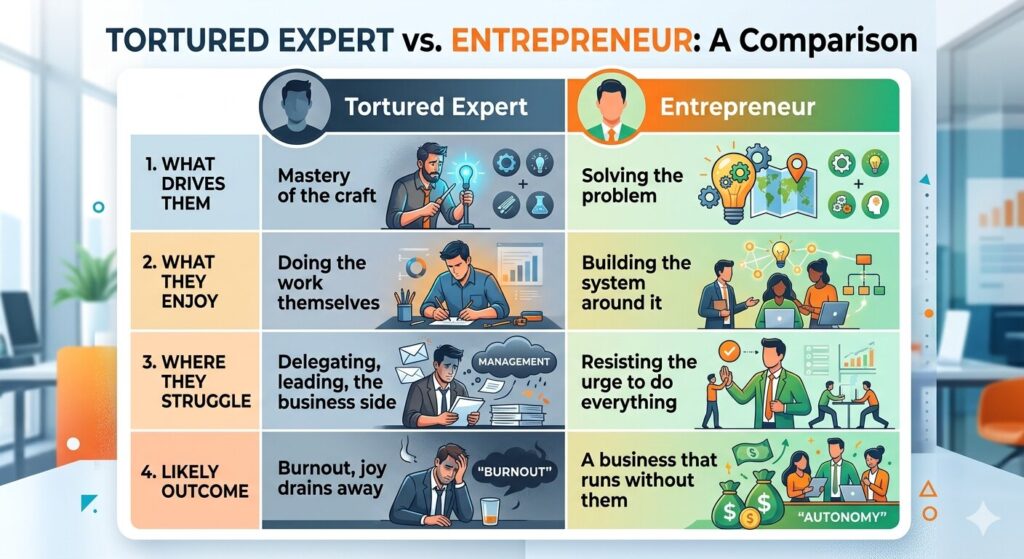
The first lesson I pulled from Caleb was a warning. He described what he calls the tortured expert, the person who is passionate and skilled at something but discovers that turning it into a business slowly kills the joy of it.
His point was that entrepreneurship is mostly the unglamorous work: accounting, cash management, intellectual property, and leading people. Being the best salesperson in the room does not mean you can run a company, because running one is a completely different skill set, the kind Caleb documents in his behind-the-scenes operator updates.
I summed it back to him with a sales analogy, and he agreed: great at the craft is not the same as great at the business. The honest takeaway is that you have to enjoy the problem-solving itself, not just the thing you are passionate about.
How He Hires Experts He Cannot Yet Evaluate
This was the part of the conversation where I actually said “that’s smart” out loud. As Caleb shifts from leading by doing to leading by delegating, he faces a real problem: how do you judge an expert when you are not the expert yourself?
“I hire a consultant who is more expert than the person I’m hiring, to evaluate that person. I’m at this knowledge level, I need to hire at this level, so I bring in someone at an even higher level to vet them.” — Caleb Christopher
His method is to pay a premium for a higher-level consultant whose only job is to help him set the vision correctly and evaluate the actual hire. He used exactly this approach to vet his new head of marketing.
The application for anyone scaling a team is clear: you do not have to become the expert in everything, but you do need a trusted way to verify the experts you bring on. It is the same instinct that runs through everything Caleb builds as a founder: borrow expertise to buy expertise.
Creative Finance, Demystified, and Why It Needed Its Own Title Company
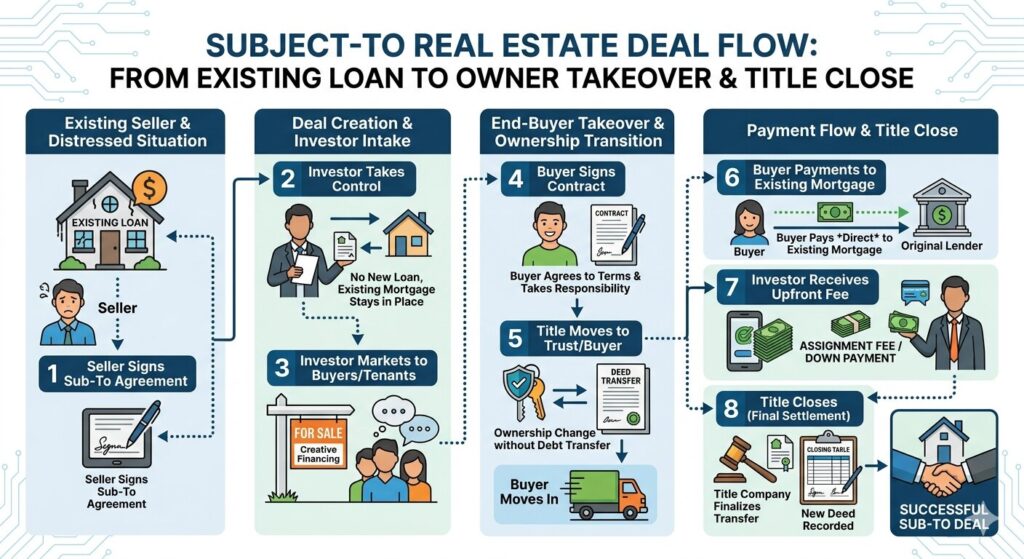
Caleb walked me through the world he lives in every day. Through Creative TC he consults on creative finance real estate in 48 states, helping people put unconventional deals on paper correctly. Two structures came up most:
- Subject-to deals — a buyer takes over the seller’s existing mortgage payments, often ideal for low-equity sellers who would otherwise pay out of pocket to sell.
- Seller financing — the owner carries the note and collects interest, effectively turning equity into an annuity.
The reason he launched Creative Title is that traditional title companies often do not understand these deals, or worse, start advising sellers and blow up a transaction that was already negotiated, the kind of behind-the-scenes work I break down in my anatomy of a sold series. His company already does about 70 percent of the same work through Creative TC, so the overlap was natural.
“Title companies either don’t know or don’t care about the intricacies of these deals. The neutral third party doesn’t get to impose their opinion. You have a contract. Just do what we agreed on.” — Caleb Christopher
He was careful to separate ethics from overreach: a title company can decline to close a deal without satisfactory disclosures, but it should never start telling a seller what personal decisions to make. That principle is the foundation behind everything Caleb Christopher of Creative TC & Creative Title is built on.
Smart and Risky Ways to Put Home Equity to Work
Because so much of my own clientele is equity-rich but not liquid, I pushed Caleb on what people can actually do with that trapped value. His framing was useful: creative finance is usually about either pulling someone out of pain or pushing someone into profit.
For a free-and-clear homeowner who does not want to be a landlord, a seller financing strategy can convert equity into steady interest income, often at a rate above what the market charges. He also explained that secured real estate notes can be a relatively safe place to park money, since the loan is backed by the right to foreclose. If you are weighing your options, my guidance for sellers is a good place to start.
But he repeatedly pumped the brakes, and this is the tactical advice worth underlining. The mistakes to avoid:
- Do not deploy capital into deals you do not understand.
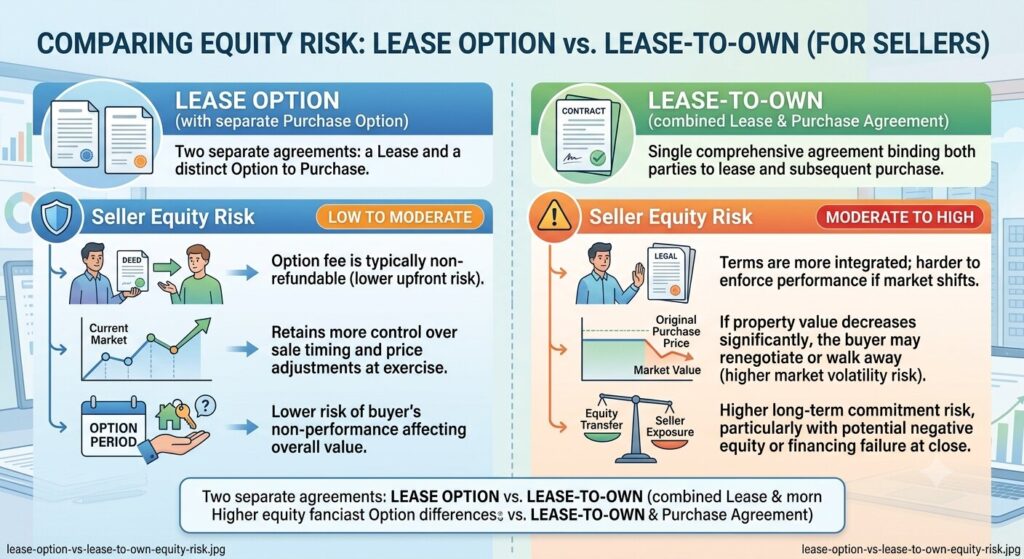
- Know that lease option vs lease to own is not a trivial distinction. A lease-to-own that grants a tenant gradual equity can force you to repay that equity if you ever have to evict, while a lease paired with a separate option to purchase keeps those risks separate.
“Everything works until it doesn’t. The paperwork demonstrates your intent, but it may not hold up. You don’t want to be a business versus a consumer in court.” — Caleb Christopher
He also flagged the legal line: do roughly three or more seller-financed deals a year and you may be treated as a lender under the mortgage loan originator licensing rules, triggering full disclosure and underwriting obligations. That nuance matters whether you are an investor or simply someone weighing a seller financing strategy on a single property.
What Changed for Me After This Conversation
“You don’t care about how until you care about why. The why is what makes the rest make sense.” — Caleb Christopher
That line reframed how I think about explaining anything to a client. I have always been the get-to-the-point person, but Caleb reminded me that leading with the reason a strategy matters is what earns someone’s attention before you ever get into the mechanics.
I also walked away thinking differently about where I add value as an agent. The places creative finance gets dangerous, family deals, deals between friends, inherited property with fuzzy intentions, are exactly where people most need a specialist in their corner before they sign anything.
Now I am quicker to tell clients that curiosity plus the right expert beats winging it. Whether it is using home equity in retirement or structuring a sale, the smartest move is often to slow down and bring in someone who has done it before. That is the real reason I wanted Caleb Christopher of Creative TC and Creative Title on the show: he makes the complicated feel safe to ask about.
Questions People Always Ask
What is a subject-to deal in real estate?
It is when a buyer takes over the seller’s existing mortgage payments while the loan stays in the seller’s name. Caleb noted subject-to deals often suit low-equity sellers, but they tie both parties together because the seller’s credit remains on the line if payments are missed, which makes clear disclosures essential.
What is the difference between a lease option and lease-to-own?
A lease option is a rental paired with a separate option to purchase, keeping the two agreements distinct. A lease-to-own typically grants the tenant equity over time, which Caleb cautions can legally require you to repay that equity if you ever need to evict.
How can a homeowner use equity without selling?
Caleb pointed to traditional tools like a HELOC, a refinance, or selling second-position debt, all of which convert equity into cash through a loan. For those thinking about using home equity in retirement, he stressed that redeploying that money only makes sense if you genuinely understand the risk of where it is going, which is exactly why I share resources for seniors navigating these decisions.
What is the difference between a broker-style expert and a true entrepreneur?
Caleb calls the trap the “tortured expert,” someone passionate and skilled at a craft who assumes that skill alone makes them a business owner. Running a company means handling accounting, cash management, intellectual property, and leading people, which is a separate skill set from being great at the work itself.
Why did Caleb start a title company instead of just using existing ones?
He found that traditional title companies often did not understand creative finance real estate, or would start advising sellers and unravel a deal that was already negotiated. Since Creative TC already performed about 70 percent of the same work, launching Creative Title to handle those closings the right way was a natural next step.
Enjoyed This One? Let’s Stay Connected
We covered a lot and still left plenty on the table. If creative finance, seller financing, or the entrepreneur mindset resonated, here’s where to keep up with the show.
💼 Connect with Caleb Christopher:
🌐 Website
🎧 Follow Robbyn Battles:
🌐 Website
Apply to Be a Guest on the I’m Just Saying Podcast
Real estate rewards the curious and the people willing to solve problems others avoid. The professionals doing that work deserve a wider audience.
If you build, finance, broker, or solve real problems in this industry, whether through creative deals, title, construction, or development, I would love to have you on the show. Learn more about the Icons of Real Estate podcast network.