

Most families don’t think about elder care planning until something forces their hand. A fall. A diagnosis. A phone call in the middle of the night with no roadmap for what comes next. I sat down with Carolyn Rosenblatt of AgingParents.com to find out why that keeps happening, and what families can do before a crisis makes the decision for them.
She’s a registered nurse with 10 years of clinical experience, a trial attorney with 27 years in practice, and the co-founder of AgingParents.com with her psychologist husband, Dr. Davis. Their combination of medical, legal, and emotional expertise under one roof is rare, and it’s central to the market they serve.
In this episode of I’m Just Saying, Let’s Get to the Point, here’s what I learned:
- Why cognitive decline warning signs in the elderly get dismissed and what to look for instead
- The three legal documents aging parents need before a crisis arrives
- What’s broken inside most older trusts and how to fix it before it matters
- How to advocate for a parent in a medical setting without getting shut out
- The reframe that changes the entire elder care planning conversation
Listen to the full conversation here:
Why I Had This Conversation with Carolyn Rosenblatt of AgingParents.com
I’ve sat at kitchen tables with adult children trying to figure out next steps for a parent who can no longer manage alone. And I’ve watched these families argue over the home, the finances, and the care plan. Unfortunately, these conversations are becoming more common for families everywhere, as AARP and the National Alliance for Caregiving estimate that 63 million American adults are caregivers in 2025, a 45 percent increase since 2015.
What I witness most often isn’t conflict over money. It’s conflict rooted in fear. The parent is afraid of losing independence. The adult children are afraid of making the wrong call. And buried under all of it is a conversation that never happened.
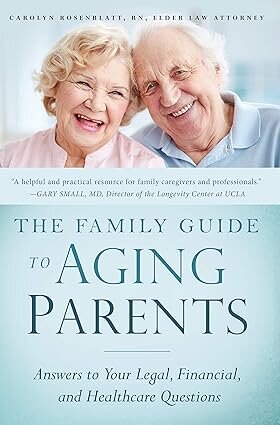
Carolyn has written several books, including “The Family Guide to Aging Parents,” and contributed to Forbes for more than 15 years. She runs her practice alongside her husband, a psychologist with decades of clinical experience. Their combination of medical, legal, and emotional expertise is what brought me to this conversation.
The Cognitive Decline Warning Signs Most Families Keep Dismissing
One of the first things Carolyn shared in the podcast stopped me. The risk of cognitive decline doesn’t creep up gradually. It multiplies.
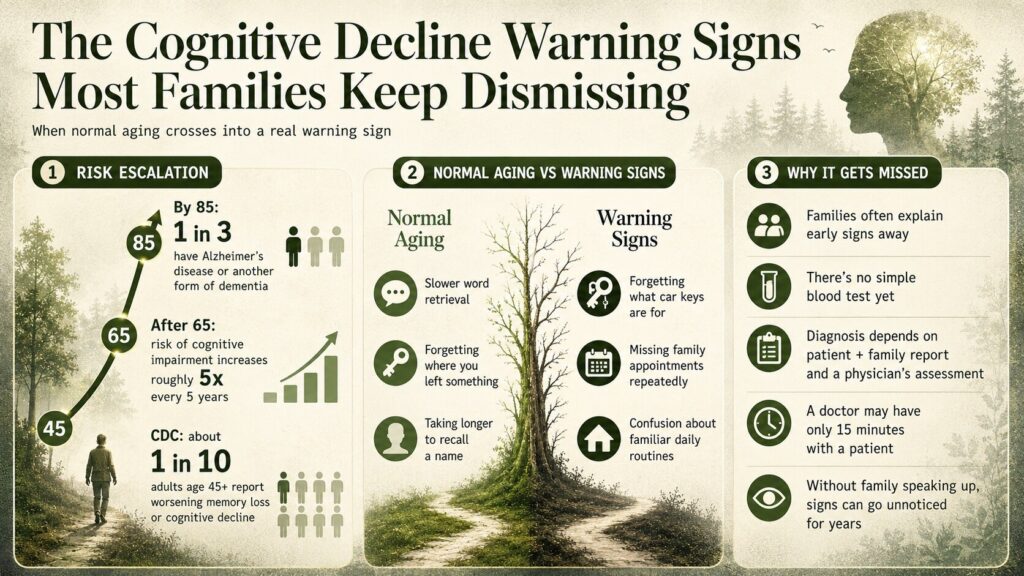
According to Carolyn Rosenblatt of AgingParents.com, the likelihood of any form of cognitive impairment increases roughly fivefold every five years after age 65, and by the time a parent reaches 85, more than one in three people will have Alzheimer’s disease or another form of dementia.
The CDC says about 1 in 10 adults age 45 and older report worsening memory loss or cognitive decline. Most families explain the early signs away. “She’s just getting older.” “He’s always been forgetful.” Yet those signs are easy for families to minimize or dismiss until they affect daily life.That dismissal is where the danger lies.
“The risk of cognitive impairment of any kind increases fivefold about every five years after 65. By the time a person gets to be 85, their chances are more than one in three of having Alzheimer’s or other dementia. That’s the biggest risk people don’t want to look at. Everybody’s afraid of it. People used to say getting cancer would be the most terrible thing. Now they say getting dementia would be the most horrible thing.”
— Carolyn Rosenblatt, RN, Attorney, AgingParents.com
She draws a clear line between normal aging and a real warning sign:
| Normal Aging | Cognitive Decline Warning Signs |
| Slower word retrieval | Forgetting what car keys are for |
| Forgetting where you left something | Missing family appointments repeatedly |
| Losing a movie title from last year | Not remembering a family dinner happened |
| Taking longer to recall a name | Confusion about familiar daily routines |
There’s no simple blood test to diagnose Alzheimer’s or dementia yet. Diagnosis depends on reported information from the patient and family, combined with a physician’s assessment. Medicare gives a doctor 15 minutes with a patient. That’s not enough time for a meaningful cognitive evaluation.
Aging parents often lie to their doctors out of fear. They’re terrified that being honest will cost them their independence. Without family members willing to speak up, cognitive decline warning signs in the elderly go unnoticed for years.
The Three Legal Documents Every Family Needs Before a Crisis Hits
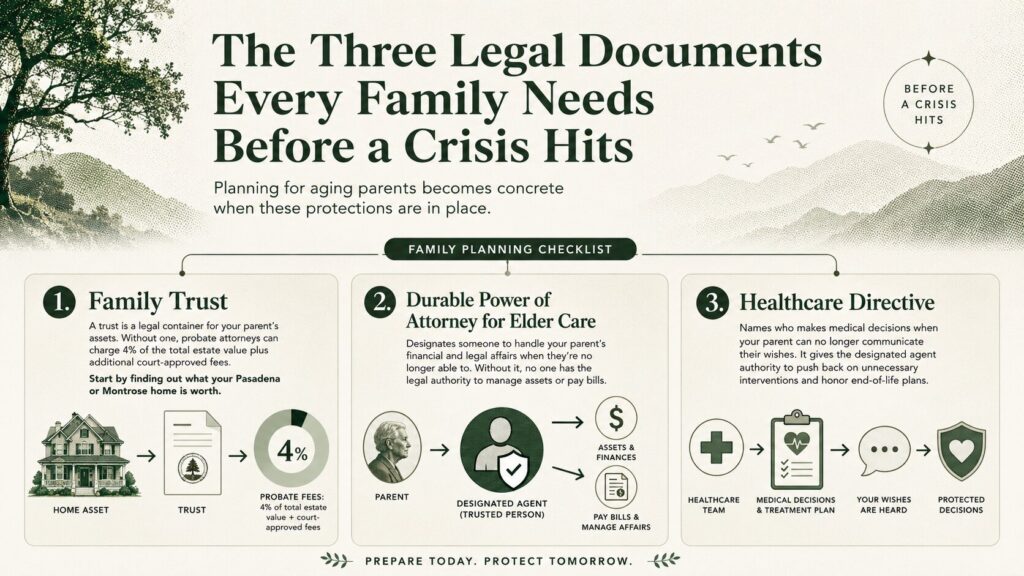
This is where planning for aging parents becomes concrete. Carolyn laid out three documents every family needs, especially if a parent owns real estate.
- A Family Trust. A trust is a legal container for your parent’s assets. Without one, probate attorneys can charge 4 percent of the total estate value plus additional court-approved fees. To understand what that exposure looks like, start by finding out what your Pasadena or Montrose home is worth.
- A Durable Power of Attorney for Elder Care. This designates someone to handle your parent’s financial and legal affairs when they’re no longer able to. Without it, no one has the legal authority to manage their assets or pay their bills.
- A Healthcare Directive. This names who makes medical decisions when your parent can no longer communicate their wishes, and gives the designated agent authority to push back on unnecessary interventions and honor end-of-life plans.
But here’s what Carolyn shared that I wasn’t expecting. Many older trusts may have language that creates problems when cognitive decline enters the picture.
“I advise families to look at amending that trust to have the language changed in case either aging loved one develops cognitive decline. All of the successor trustees can vote and say dad’s got to be off this trust. Or they can have one treating physician, not two. Or they can have a licensed psychologist like my husband do an assessment with neuropsychological testing, get test scores, and say this person is too impaired to handle money.”
— Carolyn Rosenblatt, RN, Attorney, AgingParents.com
Trusts drafted 20 or 30 years ago often require two doctors to formally declare a parent incapacitated. That standard is nearly impossible to meet in practice. Most specialists aren’t equipped to perform a cognitive assessment, and a Medicare appointment lasts 15 minutes.
According to Carolyn Rosenblatt of AgingParents.com, financial elder abuse is a $37 billion per year problem in the United States, and caregivers are the second most common perpetrators after family members, which is why she consistently recommends using a licensed, bonded home care agency.
Navigating the Transition: Moving, Staying, and Advocating Without Losing Your Parent’s Trust
As a real estate professional, I’ve been in the room when families decide for a parent instead of with them. For many of my clients working through selling a longtime family home in the foothill communities, it’s not just a transaction. It’s the place that holds their parent’s identity, history, and sense of safety.
Carolyn shared her mother-in-law Alice’s story in the podcast. What made Alice’s transition work was that she had a say. The family researched the facility together, modified the space to suit her, and stayed with her on move-in day. There were still tears.
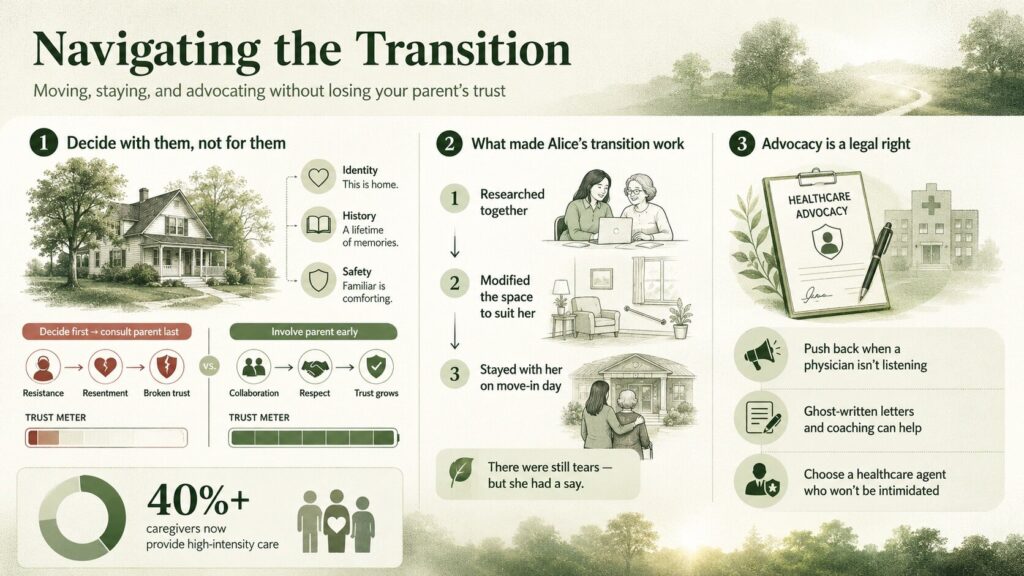
The caregiving burden is already heavy. AARP and the National Alliance for Caregiving found that more than 40 percent of caregivers now provide high-intensity care. But the families that struggle most are the ones who decide first and consult the parent last. Adult children often evaluate a facility based on appearance. They rarely ask their parent what kind of environment would actually suit them. That mismatch creates resistance, resentment, and broken trust.
On healthcare advocacy, Carolyn is direct. She was a litigator for 27 years and doesn’t back down from a physician who isn’t listening. She ghost-writes letters, coaches families through the process, and makes clear that pushing back can be part of responsible advocacy, not an act of disrespect. The person named as healthcare agent needs to be someone who won’t be intimidated in a hospital setting.
What Changed for Me After This Conversation
I’ve argued with doctors. I’ve navigated insurance gaps. I’ve watched family members disagree in real time about what’s best for someone they love. For a long time I thought that struggle was just unavoidable.
“I think there is a dignity in helping parents, even difficult parents that are horrible to you. There is an honor. When you look back after they’re gone, for the clients I’ve had who’ve had really tough aging parents and an emotionally fraught journey, after the parent is gone, they have never regretted helping. Never.”
— Carolyn Rosenblatt, RN, Attorney, AgingParents.com
What shifted for me was how Carolyn framed timing. If your parents are in their late 70s to early 80s, the window for proactive aging parent planning is right now. Not after the fall. Not after the diagnosis.
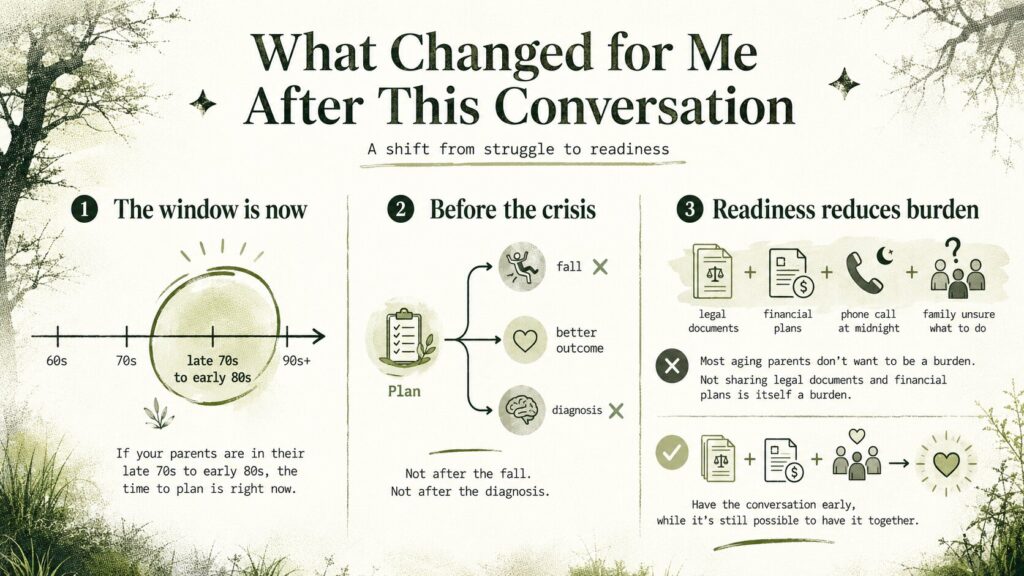
Most aging parents say they don’t want to be a burden to their children. Carolyn points out that not sharing their legal documents and financial plans is itself a burden: you’ll get the call at midnight and have no idea what to do. That reframe moves the conversation from control to readiness. It’s worth having early, while it’s still possible to have it together.
FAQ
What is the difference between mild cognitive impairment and dementia?
Mild cognitive impairment refers to memory loss that goes beyond normal aging but doesn’t yet significantly interfere with daily functioning. Most of the time it progresses toward dementia, though not always. Dementia, including Alzheimer’s disease, involves a more serious decline that affects a person’s ability to function independently, manage finances, and make decisions.
What three legal documents should every aging parent have in place?
According to Carolyn Rosenblatt of AgingParents.com, the three essential documents are a family trust, a durable power of attorney, and a healthcare directive. The trust protects assets from probate. The durable power of attorney names someone to handle financial and legal matters when the parent cannot. The healthcare directive names who makes medical decisions if the parent can no longer communicate their wishes. Without all three, families often find themselves legally unable to act when a crisis arrives.
How do you start a planning conversation with a parent who refuses to discuss it?
Carolyn recommends leading with the parent’s own stated values. Most aging parents say they don’t want to be a burden. Point out that not sharing legal and financial plans creates that burden, because family members won’t know what to do when a crisis arrives. Give them ownership of the process rather than arriving with decisions already made.
How do you know if a parent’s memory loss is a warning sign or just normal aging?
Normal aging can mean slower word retrieval or occasionally forgetting where you put something. A warning sign is when memory loss starts interfering with daily life: missing appointments consistently, not remembering that a family dinner took place, leaving the stove on. Forgetting where the car keys are is normal. Forgetting what car keys are for is not. Carolyn Rosenblatt of AgingParents.com offers free resources at agingparents.com to help families identify these signs and take informed next steps.
Keep the Conversation Going
If you want help navigating aging parent care, family conflict, and legal/health decisions for aging loved ones, reach out to Carolyn Rosenblatt:
Website → https://agingparents.com/carolyn-rosenblatt/
LinkedIn → https://www.linkedin.com/in/carolynrosenblatt
Facebook → https://www.facebook.com/agingexperts
YouTube → https://www.youtube.com/@agingparents
If something in this episode made you think, question, or laugh, don’t let it stop here.
Follow Robbyn Battles and stay part of the conversation:
Website: https://www.thehouseagent.com/
Facebook: https://www.facebook.com/RobbynBattlesTheHouseAgent
Instagram: https://www.instagram.com/robbynbattles/
LinkedIn: https://www.linkedin.com/in/robbynbattles/
You can also click here to see more Southern California real estate news and foothill market updates.
Or go here to find out what your Pasadena or Montrose home is worth.
Apply to Be a Guest on “I’m Just Saying, Let’s Get to the Point” Podcast
If you serve the real estate industry, through staffing, lending, brokerage, technology, or advisory, and help agents grow smarter, not harder…
Let’s spotlight your insights.