

There’s a quiet belief running through the housing market right now that the smartest move is to sit on the sidelines. Wait for rates to drop. Wait for prices to soften. Wait for inventory to flood back. But the longer I watch buyers wait, the more I see them lose money they never realized was on the table: appreciation they missed, equity they never built, and homes that simply moved on without them.
On a recent episode of my podcast, I sat down with Chris Khachig Eskandarian of Property Lending Group, the branch manager and mortgage loan advisor based in Glendale, California, with more than a decade in residential mortgage lending. Our conversation pulled back the curtain on what waiting actually costs, and what buyers should be doing instead.
Here’s a preview of that episode:
Why I Had This Conversation
I’ve spent years walking buyers through offers, financing decisions, and the emotional weight that comes with both, and one pattern keeps repeating itself. People hesitate because they’re hoping the market will hand them a better deal next month, next quarter, or next year. Meanwhile, the buyers who quietly take action are the ones building wealth.
Chris brought something to this conversation I rarely hear from lenders: clarity without the sales pitch. He’s been a mortgage loan advisor since 2012, focused on one- to four-unit residential properties across California, and leads a growing branch out of Glendale. His perspective fuses the math of mortgages with the lived reality of buyer psychology, and that’s exactly the lens I wanted my audience to hear.
Watch the full episode here:
Why Waiting for the Perfect Rate Often Costs More
The first thing Chris and I unpacked was the math that most buyers never sit down and run. When someone tells me they’re waiting for rates to drop, what they’re really saying is that they believe a lower rate equals a better deal. But Chris pointed to something striking: once rates dipped closer to 6%, roughly 5.5 million home buyers re-entered the market. If rates drop another eighth or quarter point, that pool grows again, and so does the competition for every listing.
On an $800,000 loan at today’s rates, at around 5.80–5.99%, a buyer is looking at roughly $6,050 a month. A year ago, when mortgage interest rates sat about a point higher, that same loan ran $500 to $600 more per month, but the home was also worth less, so the buyer who acted then is now sitting on appreciation the waiter never captured.
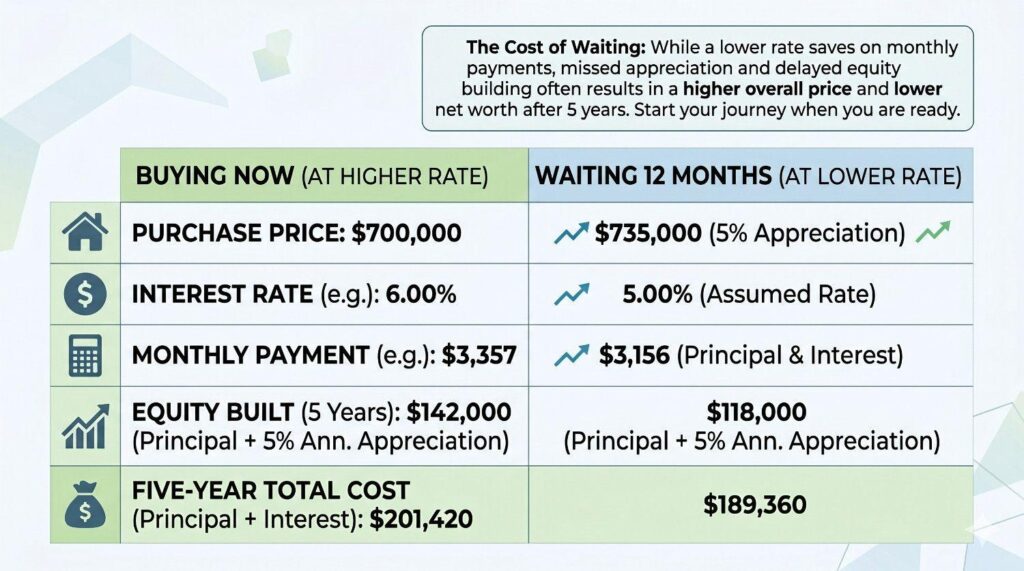
What stood out to me is how confidently buyers will try to time the rate without ever timing the home price. They’re optimizing for one number while ignoring three others that matter just as much.
The Hidden Costs Most Buyers Never See
One of the conversations I get most from buyers is about fees: origination fees, discount points, lender credits, and underwriting charges. Most people never realize how much these line items can swing the lifetime cost of a loan, and Chris was direct about why.
“There is a lot of misinformation in this business, unfortunately. There are a lot of unethical loan officers. What I mean by that is they might quote you a lower rate, but then there are points and hidden fees tacked onto it that they didn’t disclose, they didn’t tell you, but you just signed, and here you are.”
He’s seen closing docs from clients who had no idea they’d paid a point to buy down a rate they thought was the standard offer. The cheapest-looking quote on paper isn’t always the cheapest loan in practice; the loan officer you work with matters as much as the institution behind them.
A good advisor explains the trade-offs in plain English. A bad one quotes a teaser rate and lets the fee structure do the damage at signing.
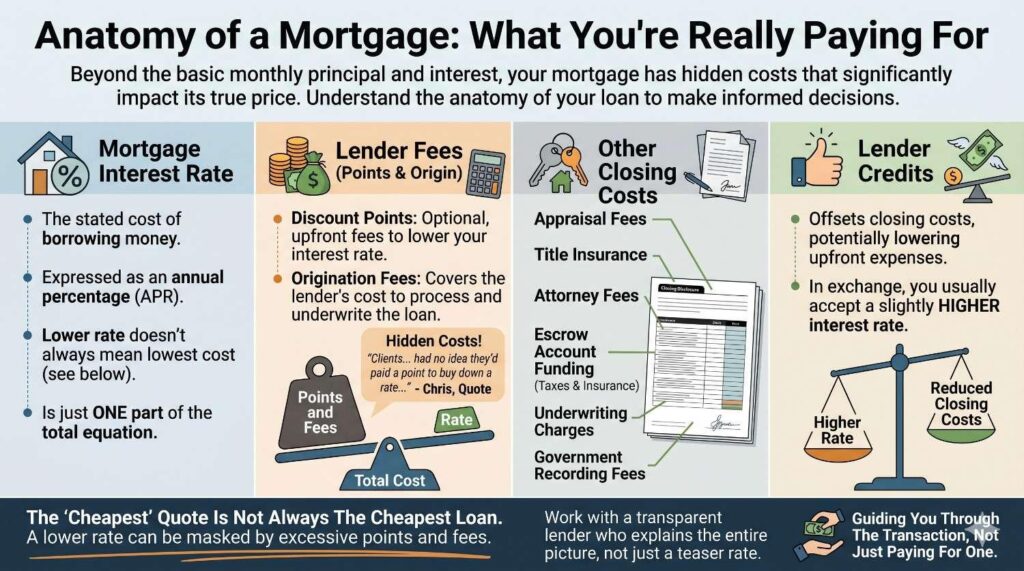
That’s the difference between paying for a transaction and being guided through one.
Loan Programs That Open Doors for First-Time Buyers
This is the section I wish every first-time buyer in the California mortgage market could hear. Chris broke down the loan programs most people never get explained to them, like FHA at 3.5% down, conventional at 5%, down payment assistance options, and the CalHFA Dream for All program, which his team specializes in for buyers who have the income and credit but not the down payment.
For self-employed buyers (entrepreneurs whose tax returns show creative deductions), Chris pointed to bank statement loans that can qualify a buyer with as little as six months of strong business deposits and a CPA letter, instead of requiring the traditional two years of returns.
What hit me hardest is how many buyers walk away from homeownership because someone told them they needed twenty percent down. That’s outdated thinking, and it’s locking people out of a market they could absolutely enter with the right structure. Chris’s approach starts with the buyer’s actual situation—income, credit, savings, timeline—and works backward into the right program.
There are paths into first-time home buyer loan programs that many people don’t know exist.
Building an Offer That Actually Gets Accepted
In California, the listing isn’t the hard part; the offer is. Inventory remains painfully tight. In a zip code I work heavily, La Crescenta’s 91214, there are nearly 9,800 single-family homes, and only 22 are on the market on any given day. My last listing under a million dollars drew thirteen offers. That’s the reality buyers are walking into.
“Working with an experienced and reputable loan officer or lender—that’s not a call center. That’s not a big institution where your loan is going to be sent out to the East Coast for an underwriter review. Over here, everything is in-house. We have direct communication with our underwriters.”
This was the moment of the conversation I want every buyer to internalize. Price gets attention, but certainty closes the deal. A pre-approval that’s been fully underwritten (not just a soft credit pull and a glance at a pay stub) gives the listing agent confidence the deal won’t fall apart in escrow.
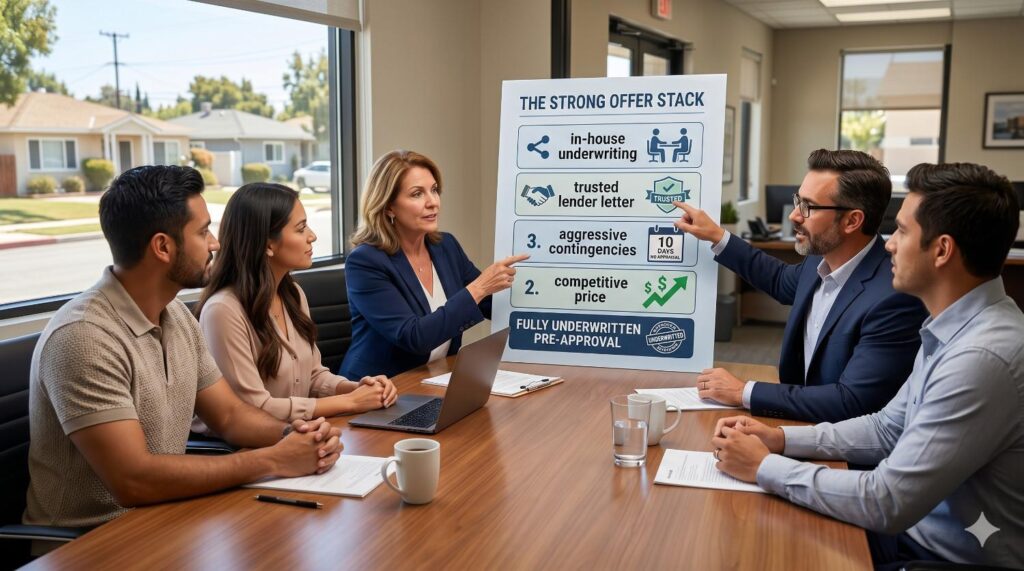
Chris’s team can shorten loan and appraisal contingencies to as little as ten days and close escrow in 21 days as a standard. The smartest home-buying strategy in this market treats financing with the same discipline as the search.
What Changed for Me After This Conversation
“This is the time to buy—when you’re ready as a buyer. There’s another piece to this: timing the market, whether it’s home prices or rates or whatever formula you follow or podcast you listen to. It’s impossible, guys. There’s really no way to time it. It comes back to: it’s when you’re ready.”
What I’m carrying from this conversation is a sharper way of guiding my own clients. The question isn’t “Should I buy a home now or wait?” The question is, “Am I actually ready to buy when the right one shows up?”
That reframing changes everything. It shifts the conversation from market speculation to personal readiness—credit, savings, employment stability, and advisor team. And readiness is something a buyer can actually control.
Want to hear my full conversation with Chris on the real cost of waiting to buy a home?
Frequently Asked Questions
Is now a good time to buy a home in California?
The honest answer Chris and I landed on is that the right time is when you’re financially ready, not when the headlines feel friendly. Markets reward action and punish hesitation more often than buyers expect.
How much do I really need for a down payment?
It’s far less than most buyers assume. FHA programs start at 3.5%, conventional loans start at 5%, and CalHFA Dream for All offers down payment assistance for qualified buyers.
What’s the biggest mistake first-time buyers make?
Shopping for a home before shopping for a lender. Get fully pre-approved first so your offer carries real weight when the right home shows up.
Apply as a Guest on the I’m Just Sayin’ Podcast
Real estate is shifting fast. Mortgage rules are rewriting themselves. Buyers and sellers are searching for clarity in a noisy market. My conversation with Chris Khachig Eskandarian of Property Lending Group is the kind of perspective my audience needs more of—practical, honest, and built on real client outcomes. If you’re solving real problems in lending, brokerage, investment, or strategy, I’d also love to hear from you!
I’m Just Sayin’ is produced by Icons of Real Estate, the #1 Real Estate Podcast Network. If you are a real estate professional, apply to be a guest speaker across the network!