

 Few financial topics make people flinch the way reverse mortgages do. Mention one at a barbecue and half the table scatters, convinced it is a scam that takes your house.
In this episode, I sit down with Don Graves of Housing Wealth Institute founder and reverse mortgage educator, an adjunct instructor at The American College of Financial Services and a best-selling author, to challenge everything most of us think we know.
Here’s a quick clip from our conversation:
We get into why the fear exists, how a reverse mortgage actually works, and a purchase strategy I had never heard of that completely changed how I see equity. This one is for retirees, their families, and anyone sitting on home equity who wants real options instead of fear.
Why I Had This Conversation
My own mother had a reverse mortgage, so I walked into this with real questions and a healthy dose of skepticism. I wanted someone who would not sugarcoat it but also would not sell me fear.
Don was exactly that. He prefers the title “chief conversation starter,” and after 26 years and roughly 16,000 consumer conversations, he has earned it. He founded the Housing Wealth Institute and teaches financial advisors how the modern reverse mortgage benefits clients in retirement income planning.
What struck me most was his refusal to hide from the scary reputation. He leans into it, then calmly takes it apart. That is the kind of guest I want explaining a topic this loaded.
“A reverse mortgage is just four letters: it’s just a mortgage. A home equity loan for retirees 62 or better that lets them borrow without giving up ownership or making monthly mortgage payments.” — Don Graves
You can watch the full episode here:
Where the Fear Came From, and Why It No Longer Holds
The first thing I wanted to understand was why reverse mortgages carry such a stigma. Don separated it into two causes: bad actors and bad actions.
In the early days, some unscrupulous lenders preyed on vulnerable homeowners, with Philadelphia as an epicenter. The Reverse Mortgage Stabilization Act of 2013 rooted out most of those bad actors. The more lasting damage came from “bad actions,” like Uncle Junebug who “lost his house” and blamed the loan, despite the ways the modern reverse mortgage benefits clients.
What Uncle Junebug left out is that he had not paid his property taxes in four years. A reverse mortgage carries four requirements: if married, at least one borrower lives in the home, maintains it, keeps insurance in force, and pays the taxes. Miss those, and the municipality acts, not the lender.
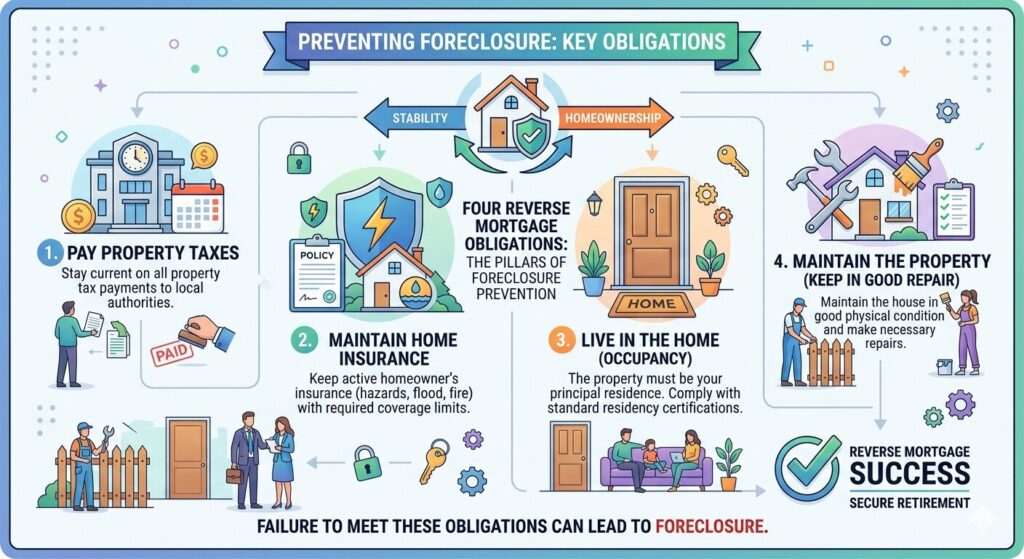
The takeaway I drew is simple: most reverse mortgage horror stories are really stories about unmet obligations or outdated practices, not the product as it exists today.
How a Reverse Mortgage Can Turn a Mandatory Payment Into a Voluntary One
This is where Don changed my framing entirely. He walked me through a case using a homeowner he called Mrs. Flintstone, and his approach was never to lead with the product.
Instead, he asks a question: if you had a choice, would you rather your mortgage payment be mandatory or voluntary? Almost everyone says voluntary, for the freedom, flexibility, and control. Only then does he show how a reverse mortgage for retirement can make that happen.
“If we could turn your mandatory monthly mortgage payment into a voluntary one, would you want to see how it works? I haven’t mentioned the reverse mortgage at all. I’ve mentioned retirement sustainability.”
The amount available comes down to three things:
- The age of the youngest borrower (older means more)
- The home’s value
- The expected interest rate
In his example, an 83-year-old with a 1.2 million dollar home might access around 600,000, enough to pay off the existing 450,000 mortgage and still leave a growing HECM line of credit for emergencies and enjoyment. That reserve is the part most people overlook when they picture a reverse mortgage for retirement, and it is exactly the kind of strategy Don teaches at the Housing Wealth Institute.
The Reverse for Purchase Strategy I Had Never Heard Of
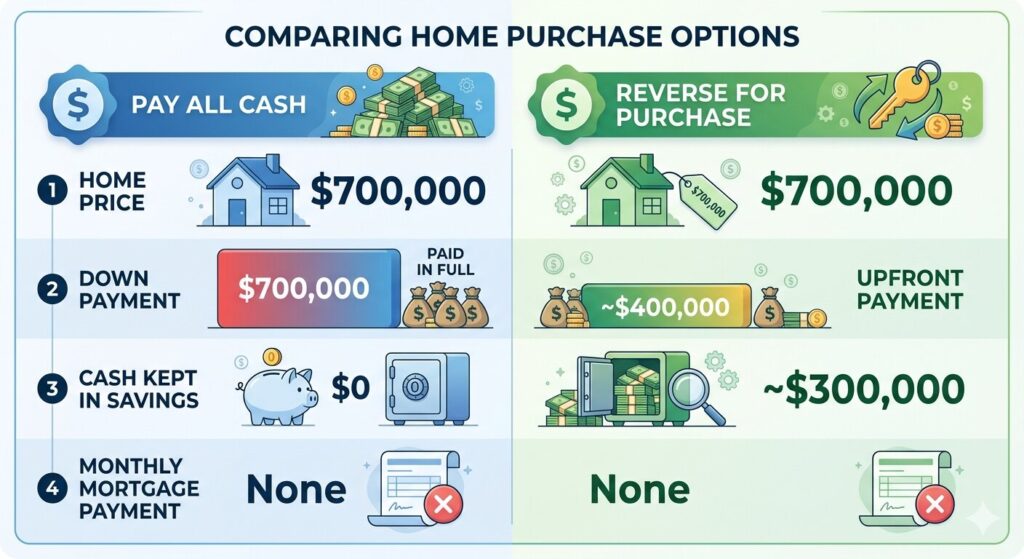
I have been in real estate a long time, and this section genuinely caught me off guard. Don explained the reverse for purchase program, created under the Housing and Economic Recovery Act of 2008, which lets retirees buy their next home with roughly 60 to 65 percent down and no monthly mortgage payment.
Here is how I walked it back in my own terms. Say a home seller nets 700,000 in proceeds and wants a 700,000 next home. Instead of paying all cash, they put down around 400,000, the reverse mortgage covers the rest, and they keep roughly 300,000 to add back to retirement savings, with no mandatory payment.
“Would you rather have the apple tree or the orchard? If mama doesn’t have to spend down her IRA because we preserved it, that’s not support coming out of your pocket, and there’s more left in the end.” — Don Graves
The application of the reverse for purchase program is huge: a buyer can use a reverse mortgage loan to buy a home that is their next, last, and best, buy more than they thought possible, and preserve liquidity. Don was also candid about the ethics, noting he would rather protect the parent’s “financial oxygen” than optimize an inheritance for “evil kids circling the car.”
What Happens to the Loan Over Time, and What Heirs Should Know
Because my family lived through this, I pressed Don on the mechanics most people worry about: does the balance grow, and what happens when the borrower passes? His answers were reassuring and worth spelling out.
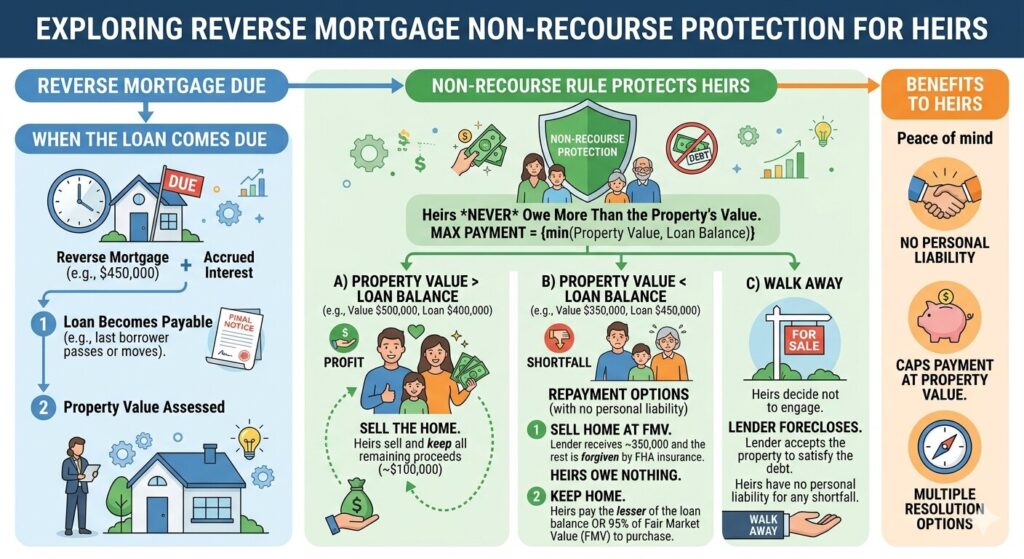
A reverse mortgage works like a credit line, and as Don explains, the modern reverse mortgage benefits your clients in overlooked ways. Draw nothing and you owe nothing; draw on it and the balance grows with interest each year since you make no payments. The loan becomes due when the last borrower permanently leaves the home, with six months to repay and extensions up to about a year if the family stays in contact with the servicer.
The protection that surprised me most: every reverse mortgage is non-recourse. If the home ends up worth less than the balance, the lender’s only recourse is the net proceeds from the sale. No deficiency judgment touches the heirs or other assets.
- Balance owed less than home value: heirs keep the remaining equity after payoff.
- Balance owed more than home value: non-recourse protection caps repayment at the sale proceeds.
- Family stays in communication: the repayment timeline can extend up to roughly a year.
What Changed for Me After This Conversation
“Retirement is going to last longer, be less predictable, and more expensive than ever before. I have to make sure you have enough financial oxygen to last.” — Don Graves
That line reframed how I talk to my own clients. I used to see a paid-off house or an all-cash purchase as the obviously safe move. Now I see that locking up every dollar in a home can leave retirees house-rich and dangerously cash-poor.
I also walked away understanding that the smartest version of this conversation is proactive, not reactive. Don compares it to catching a problem at stage one instead of stage four, and that fits exactly how I want to serve clients heading into retirement.
When I meet a homeowner weighing whether to downsize, stay put, or buy all cash, I am now quicker to say there may be a third option worth understanding before they decide. The whole reason I wanted Don Graves of the Housing Wealth Institute on the show is that using home equity in retirement wisely is about preserving choices, and good retirement income planning gave me new ones to offer.
Questions People Always Ask
What is a reverse mortgage, in plain terms?
Don describes what a reverse mortgage is in plain terms as “just a mortgage,” a home equity loan or line of credit for homeowners generally 62 or older that lets them borrow against the home without giving up ownership or making monthly mortgage payments. The borrower still must live in the home, maintain it, and keep taxes and insurance current.
What is the reverse for purchase program?
It is a federally authorized program from 2008 that lets retirees buy their next home with roughly 60 to 65 percent down and no required monthly mortgage payment. Don notes it allows buyers to move to a new home while preserving a large portion of their proceeds for retirement savings.
What happens to a reverse mortgage when the homeowner dies?
The loan becomes due when the last borrower permanently leaves the home, with about six months to repay and possible extensions. Because reverse mortgages are non-recourse, if the balance grows larger than the value of the home, repayment is limited to the sale proceeds and heirs are not personally liable.
Does the loan balance grow over time?
Yes. Because no monthly payments are required, interest is added to the balance each year, so what you owe rises rather than falls. Don compares the unused portion to a credit line, if you do not draw on it, you do not owe on it, but any balance you carry will compound.
Is a reverse mortgage a good idea for everyone?
No, and Don is clear that the first step is education, not a loan application. He starts with the retiree’s biggest concerns, longevity, lifestyle, liquidity, legacy, and long-term care, then weighs whether the strategy actually supports their goals before anything is decided.
Enjoyed This One? Here’s Where to Stay Connected
We covered a lot and still left plenty on the table. If rethinking reverse mortgages or planning a more secure retirement resonated, here’s where to keep up with the show.
💼 Connect with Don Graves:
🌐 Website
🎧 Follow Robbyn Battles:
🌐 Website
Apply to Be a Guest on the I’m Just Saying Podcast
Retirement is changing, costs are climbing, and the experts who help people navigate it deserve a wider audience.
If you work in real estate, finance, lending, or any field that helps people make better decisions about their money and their homes, I would love to have you on the show. Learn more about the Icons of Real Estate podcast network.