

 Balance problems rarely announce themselves all at once. You may first notice someone moving more slowly, hesitating at a curb, looking down while walking, or reaching for support more often.
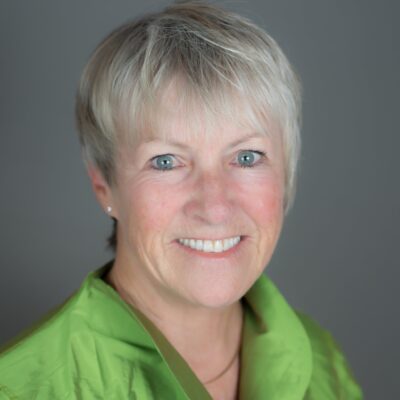
In my conversation with Dr. Debbie Rose of Pro Balance Academy, I wanted to understand what happens before that first noticeable fall. Debbie has spent more than 40 years working in kinesiology, motor control, mobility, and fall prevention. What she explained made me look at balance much differently.
In this episode of I’m Just Saying, Let’s Get to the Point, we talk about:
- Why the systems involved in balance can start changing in our 40s
- How vision, foot sensation, strength, and posture work together
- What simple movement habits can support balance
- Why walkers and canes need to fit the person using them
- Why the person teaching balance exercises matters
Check out the highlights here:
Why I Had This Conversation About Dr. Debbie Rose and Pro Balance Academy
My interest in this topic is personal. My mom had balance issues after a stroke, and I watched people work with her during therapy. One thing kept bothering me. So much of the balance work seemed to happen while she was sitting in a chair.
I kept thinking about her feet.
I remember asking her, “Do they ever work on your feet?” That question became part of my conversation with Debbie because I wanted to know whether I was looking at balance the right way.
Debbie explained that her work started in academia. She studied human movement, motor control, balance, gait disorders, and fall prevention. Eventually, she wanted to take what she had learned in research and apply it in the real world.
Why Balance Problems Can Begin Earlier Than We Think
One of the biggest things that caught my attention was how early balance-related changes can begin.
Debbie explained that some of the systems contributing to balance start changing as early as our 40s. Vision changes. Our ability to sense where we are in space can change. The vestibular system in the inner ear can also change.
That means the first fall may happen long after the process has already started.
“I don’t think they ever learn how to fall. I think they start falling. We start to see changes in the multiple systems that contribute to balance as early as our 40s. So we start to see changes in vision, which is critical for balance. We start to see changes in how well we feel and sense where we are in space.” — Dr. Debbie Rose, Founder of Pro Balance Academy
Watch the full conversation here:
That early timeline matters because it changes the conversation. Instead of waiting for a fall, we can start paying attention to how the body is moving much sooner.
Balance Is More Than Strength or Standing on One Leg
Before this conversation, I already thought about balance in terms of feet, posture, and strength. Debbie helped connect those pieces.
The Systems That Keep You Balanced
Balance depends on several systems working together.
| Balance System | What It Contributes |
| Vision | Helps orient the body and maintain stability |
| Vestibular system | Gives information about head movement and orientation in space |
| Somatosensory system | Helps us feel the surface beneath our feet and where the body is positioned |
| Muscular system | Provides the strength and power needed to maintain or recover balance |
| Postural alignment | Helps keep the body positioned for stable movement |
Debbie explained that the feet are especially important because receptors underneath them provide sensory information about the surface below us.
That immediately connected with what I had noticed with my mom.
Good balance training for older adults has to account for more than one part of the body. Debbie described balance as multidimensional. If one system is weaker, another may sometimes be trained to help compensate.
Why Strength Alone Is Not Enough
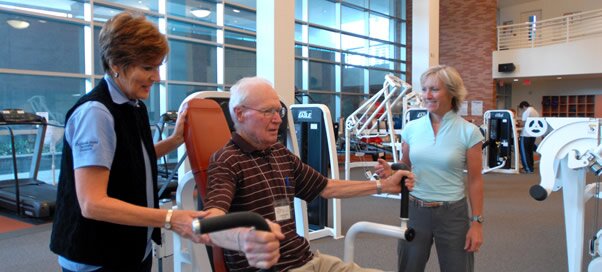
Strength still matters. Debbie said that when she begins working with an older adult, she evaluates strength because someone needs enough strength to perform meaningful balance exercises.
But strength and balance need to work together.
“Any effective balance training program is going to combine strength and balance training. We know that from all the research that’s been conducted over the last several decades, that it is a combination of balance and strength that are the most effective components of a balanced training program. It’s not to say that flexibility isn’t important, it is, but those are the two key ingredients. That will determine whether a program is effective.” — Dr. Debbie Rose, Founder of Pro Balance Academy
She also emphasized progression. Someone might appropriately begin in a chair while developing strength and seated balance, but the work should progress when that person’s abilities allow it.
That is where Pro Balance Academy balance training becomes more specific than simply giving someone a few generic exercises.
Small Daily Habits Can Protect the Balance Systems We Usually Ignore
When I asked Debbie what someone could do before reaching the point where they clearly need a balance assessment, her first answer was simple: move.
Move more, and move more often.
She explained that movement helps us stay aware of our bodies. When we become sedentary, we may become less aware of how our systems are changing.
Simple Balance Habits You Can Practice Daily
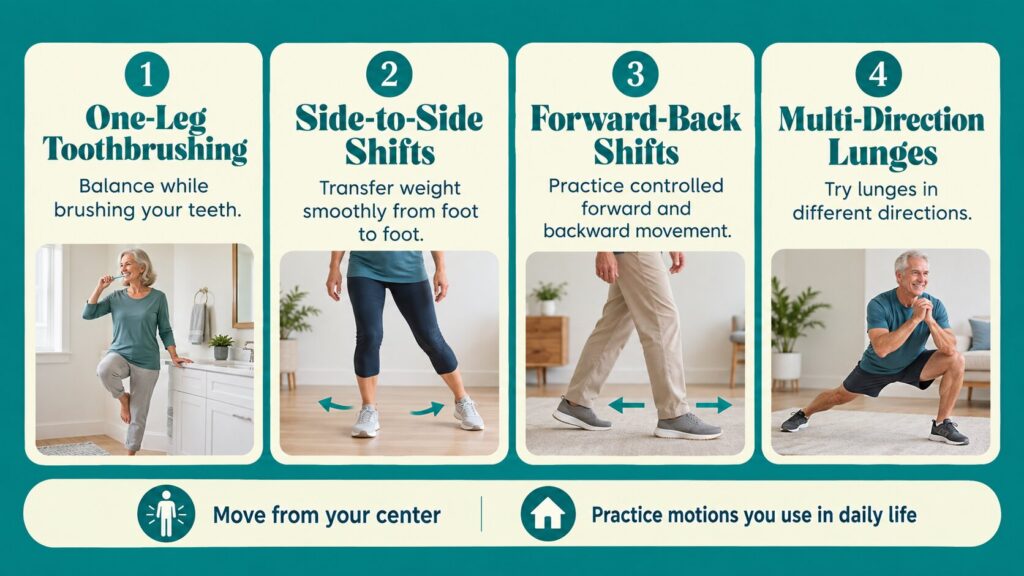
Debbie gave several examples of movements people can incorporate into everyday routines, depending on their abilities.
- Stand on one leg while brushing your teeth
- Practice shifting your weight from side to side
- Shift your weight forward and backward
- Practice lunges in different directions
- Think about moving from your center rather than leading with your head
- Connect exercises to movements you actually use in daily life
She uses what she calls the “belly button” idea when teaching weight shifting. Think about moving your center through space rather than throwing your head or shoulders toward the direction you want to go.
| Everyday Movement | What It Practices |
| Single-leg standing | Static balance |
| Side-to-side weight shifting | Control of your center |
| Forward and backward shifting | Transitional movement |
| Lunges in several directions | Dynamic balance |
| Looking ahead while moving | Posture, vision, and orientation |
Debbie also made an important safety point. Exercises on unstable surfaces or with the eyes closed are not something she recommends people simply try on their own without understanding their current balance abilities.
Why Looking Down Changes Your Posture
Vision kept coming up in our conversation.
Debbie told me she pays close attention to where she looks while moving. During exercises such as squats or lunges, she focuses on a vertical target in front of her.
Looking down changes head position. That can change postural alignment and the sensory information the body is receiving.
She also talked about what she sees when younger people constantly walk while looking down at their phones. Her concern is that repeated behaviors become habits.
That made sense to me because posture is not something we turn on only during exercise. We practice it all day.
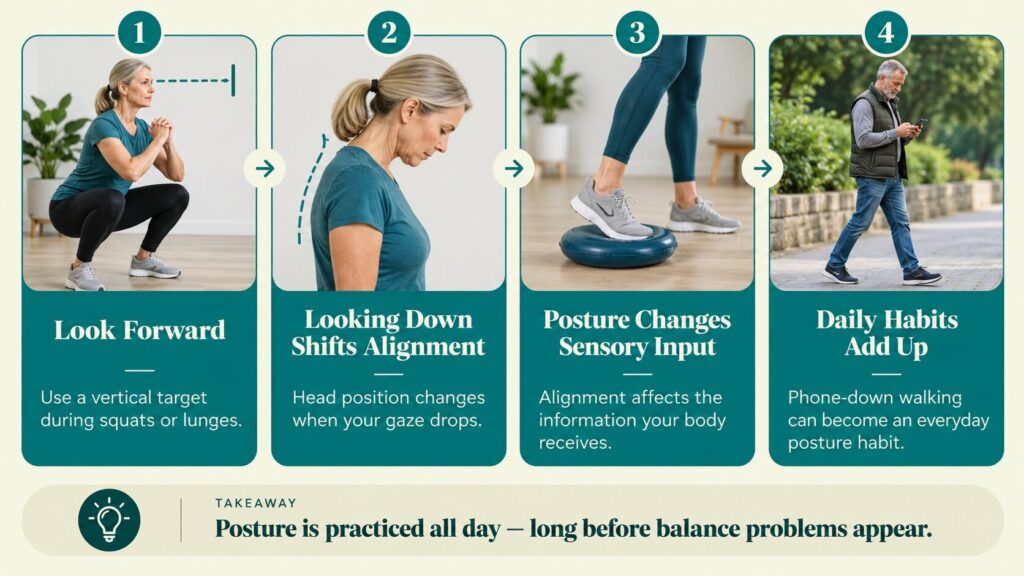
The larger lesson from our conversation about Dr. Debbie Rose fall prevention was that everyday movement matters because those habits are happening long before someone thinks of themselves as having a balance problem.
Your Walker or Cane Should Support Your Posture, Not Fight It
Another thing I have noticed is how often older adults appear bent over their walkers.
I asked Debbie why a device meant to help someone move would sometimes leave that person leaning so far forward.
Signs an Assistive Device May Be Poorly Fitted
She explained that we cannot assume every walker we see was professionally prescribed or fitted.
Someone can simply walk into a store and buy one.
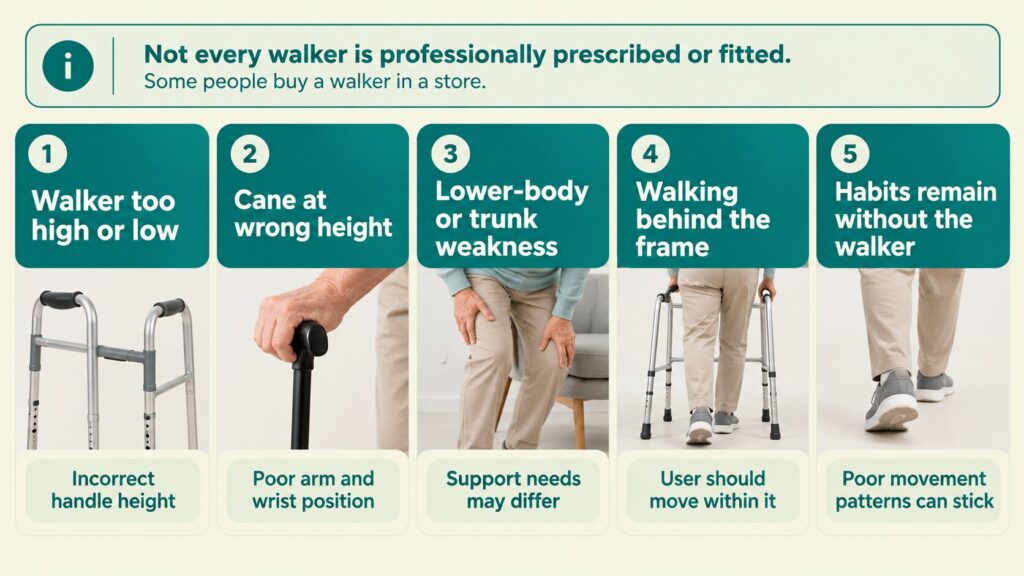
That creates several potential problems:
- The walker may be too high or too low
- A cane may not be set at the right height
- The person may have lower-body or trunk weakness
- The person may walk behind the frame rather than properly within it
- The person may develop movement habits that remain even when the walker is removed
| Better Matched Device | Poorly Matched Device |
| Supports upright alignment | May contribute to leaning |
| Height fits the individual | May be too high or too low |
| Matches the person’s needs | May be purchased without assessment |
| User understands how to operate it | Features such as brakes may not be used correctly |
Why the Right Device Is Different for Every Person
Debbie also discussed forearm walkers. She had worked with a company developing walkers with forearm holds, which could be useful for certain people, including some people with Parkinson’s disease or post-stroke symptoms.
But she was clear that resting your forearms on a walker that was not designed for that purpose is not the same thing.
The larger point is matching the device to the person.
That is part of fall prevention and mobility training too. Equipment should support the way someone needs to move, not simply be handed to them because it is available.
The Person Teaching Balance Matters More Than I Realized
This part of the conversation really stayed with me.
Knowing what an exercise is and knowing how to teach that exercise are two different skills.
Knowing the Exercise Is Not the Same as Knowing How to Teach It
Debbie’s work through the FallProof Balance and Mobility Specialist program focuses heavily on the person delivering the training.
She explained that online education can give someone knowledge, but knowledge does not automatically give that person the instructional skills needed to guide someone through a movement safely and effectively.
Take a one-legged stance.
It sounds simple. Lift one foot.
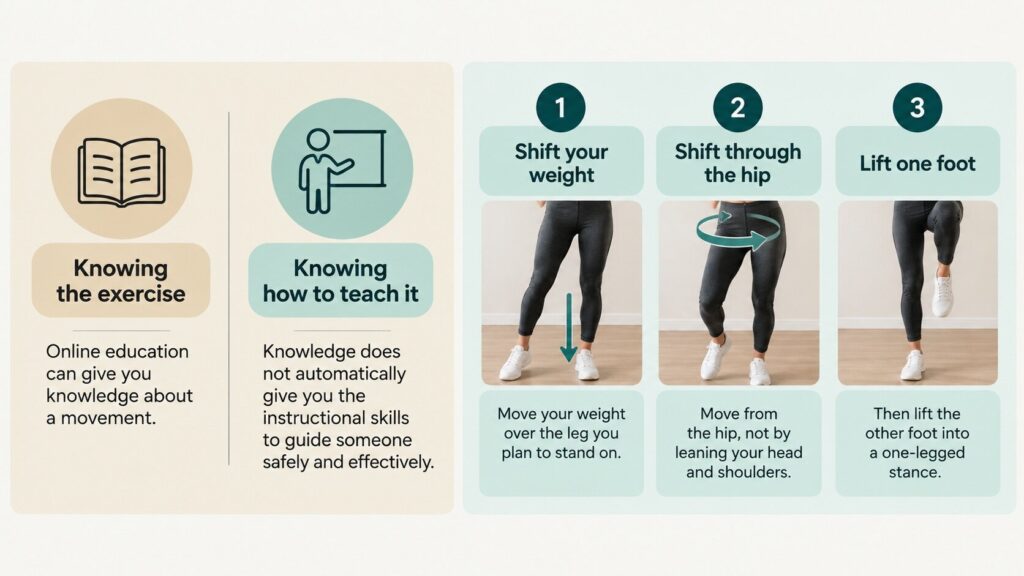
But Debbie explained that before lifting the foot, a person needs to shift their weight over the leg they plan to stand on. She also talked about shifting through the hip rather than leaning the head and shoulders sideways.
That is the difference between naming an exercise and actually teaching movement.
Why Challenge Level Matters
The difficulty level matters too.
Debbie said that when an exercise is too challenging, people may repeatedly fail. For an older adult, that can hurt confidence and motivation.
A better approach is progressive challenge within the person’s capabilities.
“One of the things that comes through over and over, particularly if you look at the world guidelines now to fall prevention, one of the key factors in whether a training program is going to be effective is the competency of the instructor delivering it. So that’s my goal. My goal is to put out as many competent fitness and healthcare professionals as I can who really understand how integrated the balance system is and how to actually design practice environments that help the older adult solve the movement problems that we face every day.” — Dr. Debbie Rose, Founder of Pro Balance Academy
That also explains why Debbie believes older adults need trainers who understand the changes that accompany aging and can program accordingly.
What Changed for Me After This Conversation
I went into this conversation already paying attention to feet, posture, and the way people move.
Debbie helped me see how tightly those pieces are connected.
The feet give us sensory information. Vision helps stabilize us. Strength supports movement and recovery. Posture changes how the body is positioned. Even the way someone uses a walker can affect how they move.
The Signs I Would Pay Attention to Earlier
Debbie mentioned several everyday signs that can appear as balance changes:
- Slower walking
- Hesitation on stairs
- Hesitation stepping onto or off a curb
- Difficulty getting out of a chair or softer sofa
- Discomfort walking on uneven surfaces
- Increasing instability during normal movement
What stood out to me is that people may notice strength changes before they recognize a balance problem. Debbie said many people do not identify balance as a problem until after the first fall.
That changes what I would watch for.
I would pay more attention to the hesitation before the fall.
FAQ Section
At what age should you start paying attention to balance?
Debbie explained that changes in systems involved in balance can begin as early as our 40s. That does not mean everyone in their 40s has a balance problem. It does mean the process can begin earlier than many people expect.
Is strength training enough to prevent falls?
Debbie described effective balance work as multidimensional. Strength is important, but it should be combined with balance training and functional movement.
Can balance improve after it has already declined?
Debbie explained that several systems interact to support balance. If one system is impaired, others may sometimes be trained to help compensate. She emphasized the importance of first identifying which systems are creating problems.
How do I know whether a walker or cane is fitted correctly?
Debbie said assistive devices should be matched to the individual. A walker or cane that is too high, too low, or inappropriate for someone’s abilities can interfere with posture and movement. Professional fitting is important.
Keep the Conversation Going
If you want evidence-based balance, mobility, and fall-prevention education for older adults, reach out to Debra J. Rose, Ph.D. (Debbie Rose):
Website → https://probalanceacademy.com/
LinkedIn → https://www.linkedin.com/in/debbie-rose-8588abb
If you want to follow similar content:
- Website: https://www.thehouseagent.com/
- Facebook: https://www.facebook.com/RobbynBattlesTheHouseAgent
- Instagram: https://www.instagram.com/robbynbattles/
- LinkedIn: https://www.linkedin.com/in/robbynbattles/
If you’re also here for my real estate work in Southern California, you can:
- Explore Foothill community neighborhoods across La Cañada and Pasadena
- Follow Southern California real estate news and foothill market updates
- Get a free home valuation in La Cañada Flintridge
- Learn how to sell your foothill community home with confidence
- Read about buying a home in Pasadena and nearby foothill communities
Apply to Be a Guest on “I’m Just Saying, Let’s Get to the Point” Podcast
This podcast is all about conversations that help people look more closely at the issues affecting their families, homes, health, work, and communities.
My conversation with Dr. Debbie Rose of Pro Balance Academy is a good example of why I enjoy doing this podcast. I started with questions based on what I had seen with my own mom, and I left with a much clearer understanding of how vision, strength, posture, sensation, and instruction all work together.
If you have practical experience, professional expertise, or a perspective that could help other people think differently about an issue, I would love to hear from you.