

Most of us believe that if we just work harder, push through, and stay focused, we will eventually get the results we want. I have been in real estate long enough to know that hustle alone does not guarantee results. What I did not know until my conversation with Dr. Eugene K. Choi is that working too hard can literally shut off the parts of your brain responsible for your best decisions, your most creative ideas, and your strongest client relationships.
Dr. Eugene K. Choi’s Neuroscience Leadership Coaching is not a motivational concept. It is grounded in brain science. After sitting down with Dr. Choi on I’m Just Saying, Let’s Get to the Point, I walked away with a completely different understanding of how my brain was actually working day to day.
In this episode, we covered:
- Why working hard and working smart are not the same thing
- The two brain states that determine everything about your performance
- Why 95% of your thinking is happening on autopilot
- Simple, science-backed techniques to shift your brain when you are stuck
- How Dr. Choi uses neurofeedback and biofeedback in his coaching practice
Check out the highlights here:
Listen to the full episode:
Dr. Eugene K. Choi’s Neuroscience Leadership Coaching: Why I Had This Conversation
Dr. Choi left a career as a pharmacist and LA County supervisor, pivoted into filmmaking, and then took a 75% pay cut to be mentored by a CEO. During the pandemic, he wrote an article on brain science that went viral, reaching 7 million views. That kind of trajectory made me pay close attention.
Because when someone quits a stable career not once but twice, the first time just to escape, and the second time to build something on purpose, that tells me something. Most people stay stuck because leaving feels too risky. Dr. Choi did the math differently both times. That is what I wanted to dig into.
The Brain Has Two Modes, and Most of Us Are Stuck in the Wrong One
The whole framework comes down to one core idea: your brain operates in one of two states at any given moment.
Understanding the survival state vs executive state distinction is not abstract. Once you see it, you see it everywhere.
- The survival state is your reactive brain, designed for genuine life-threatening situations where pausing to think could get you killed.
- The executive state is where your higher functions live: critical thinking, creativity, and empathy.
The key point Dr. Choi emphasized is that you can only be in one state at a time.
| Brain State | What’s Active | What’s Offline |
| Survival | Reactive responses, self-protection | Critical thinking, creativity, empathy |
| Executive | Strategic thinking, problem-solving | Fear-based reactions |
As Dr. Choi explained in the podcast:
“Your brain only operates in one of two given modes. Survival state is the part of your brain that’s very reactive. It’s only meant to help you in actual life-threatening situations. The problem is we’re in this mode most of the time when we don’t need it. The executive state is where a lot of your brain’s higher functions come from: critical thinking, creativity, empathy. When you’re scared and in survival, you’re not empathetic. You’re just thinking about yourself and your own survival.” — Dr. Eugene K. Choi, Neuroscience-Based Leadership Coach
What makes this so relevant in real estate is the empathy piece. I work with clients making some of the biggest financial decisions of their lives, whether they are buying a home in Pasadena and nearby foothill communities or figuring out how to sell their foothill community home with confidence. When I am nervous in a client meeting, thinking about whether a deal will close, I am in survival mode. Empathy goes offline. The client feels it.
The agents who come across as pushy are usually not pushy people. They are scared people, and their brains have made the whole conversation about themselves.
Why Overworking Feels Productive, but the Results Say Otherwise
Another state, we as realtors often get stuck on is the state of “overworking.”
Dr. Choi used an image I keep coming back to: imagine a tiger walks into the room. Your brain locks on. You develop tunnel vision. You cannot look anywhere else. That is exactly what the fight or flight response in business does to us. The unsettling part is that the same tunnel vision kicks in during what we call a “head down, hard work” mode.
The harder we push in that survival state, the narrower our vision becomes. Better solutions and smarter paths exist just outside the tunnel. We just cannot see them because our brain is not built to look sideways when it perceives a threat.
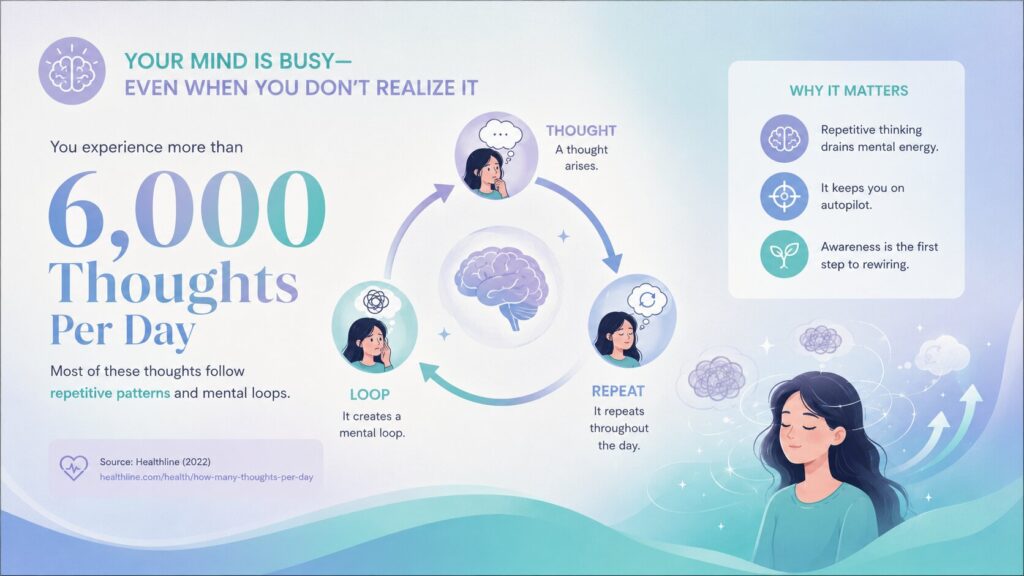
The business cost of chronic stress is staggering. According to the World Health Organization, depression and anxiety contribute to roughly 12 billion lost working days globally every year, costing the world economy an estimated $1 trillion annually in lost productivity. That is what happens when an entire workforce stays stuck in survival mode without realizing it.
The fix is not to work less. It is to exit tunnel vision so you can access better strategies and reach your goals faster.
95% of Your Thinking Is on Autopilot
Here is the part in this podcast episode that should make every business owner stop and pay attention: by the time you are around 35 years old, Dr. Choi says roughly 95% of your brain is operating on autopilot. Your patterns of thinking, your emotional triggers, and the way you respond to stress, most of that is running like a program you never consciously installed.
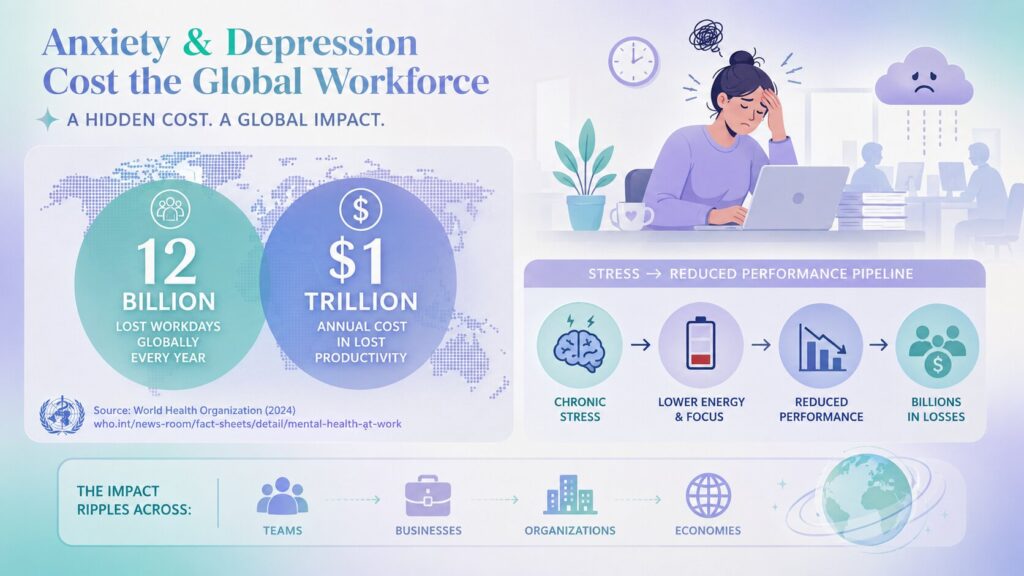
Researchers estimate the average person experiences more than 6,000 thoughts every single day, and much of that mental activity follows repetitive patterns. That is why identifying these loops is the essential starting point for any real behavioral change.
Rewiring autopilot thinking patterns is a neurological conditioning that starts with recognizing that most of your reactions today are echoes of patterns set years ago.
The first step is awareness.
Dr. Choi teaches a simple diagnostic you can apply in real time: are you curious, or are you concerned?
You cannot be genuinely curious when you are in survival mode. Curiosity is an executive-state function. That one question becomes your real-time indicator.
What to Do When You Catch Yourself in Survival Mode
Emotional resilience training, as Dr. Choi describes it, is not about suppressing what you feel. It is about building the capacity to move through difficult emotions without letting them take your brain offline. He walked through four techniques anyone can start using today.
- Box breathing: Five seconds in, hold for five, exhale for five. This directly signals your nervous system that you are safe.
- The double breath: Inhale, take a second inhale on top, then exhale longer than the combined inhale. Dr. Choi noted that children do this naturally after a meltdown. It is your body’s built-in reset.
- Name it to tame it: UCLA research showed that labeling a feeling, such as saying “I’m feeling anxious,” deactivates the survival brain and turns on the frontal lobe’s regulation centers. Labeling requires thought, and thought puts you back in executive mode.
- Curious vs. concerned: If you are concerned, your brain is not open to new information. Shift toward curiosity before you try to problem-solve or persuade.
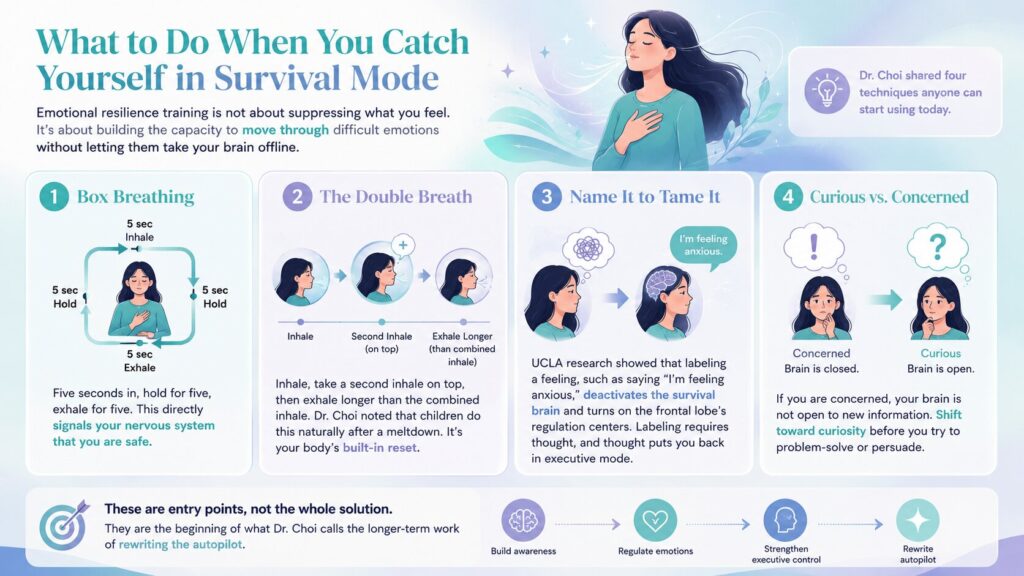
These are entry points, not the whole solution. They are the beginning of what Dr. Choi calls the longer-term work of rewriting the autopilot.
How Dr. Eugene K. Choi’s Neuroscience Leadership Coaching Works in Practice
When I asked Dr. Choi what his actual practice looks like, the answer was more specific than I expected.
He combines one-on-one coaching with technology most people have never encountered.His signature package spans 12 weeks.
- He spends four hours with each client across two days, just listening and mapping how that person’s brain is wired: what stories they carry, what memories drive their reactions.
- Then the coaching begins.
On the technology side, he uses neurofeedback for peak performance and biofeedback. A device on your forehead connects to a smartphone app that shows you in real time whether you are in survival or executive state. When your brain is calm, you hear steady rain. When stress spikes, it turns to a thunderstorm. Your brain learns to self-regulate back.
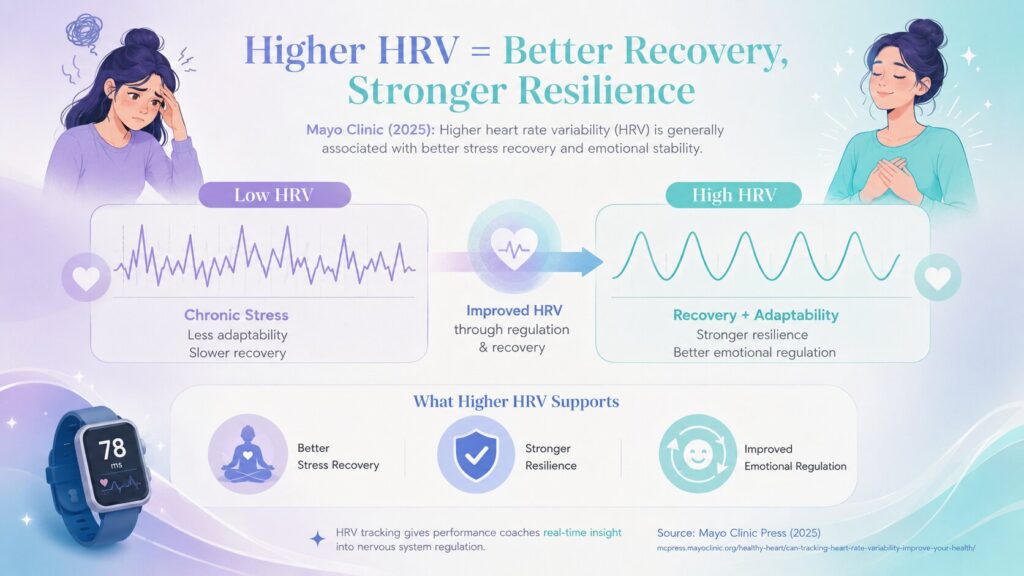
Biofeedback tracks heart rate variability (HRV). According to Mayo Clinic, higher heart rate variability is generally associated with better stress recovery and improved emotional resilience. That is why performance coaches use HRV as a measurable indicator of nervous system regulation over time.
For groups, Dr. Choi runs workshops focused on teaching the science. The personal coaching work stays one-on-one.
The Question That Changed Everything for Dr. Choi
I want to end on something Dr. Choi said that I found quietly powerful. He described a leader responding to the question, how do I find the perfect partner, with a simple redirect: would you go out with yourself?
His first reaction was no. And that stopped him. He realized that without a healthy relationship with himself, he would never be capable of building one with anyone else. He had been treating his family transactionally, using them to manage his own unresolved pain without realizing it.
“If I don’t have a healthy, loving relationship with myself, I will never have the capability of having one with someone else. Do you care about yourself enough to have your own back when you’re down? Do you love yourself enough to support yourself, or get yourself the support that you need? I think that’s a question for all of us that’s important to ask on a daily basis.” — Dr. Eugene K. Choi, Neuroscience-Based Leadership Coach
That question applies directly to how we show up for our clients. If you follow Southern California real estate news and foothill market updates, you know that buyers and sellers can feel the difference between an agent who is present and one who is preoccupied with their own anxiety. You cannot fake empathy when your survival brain has taken over.
That is what Dr. Eugene K. Choi’s Neuroscience Leadership Coaching is ultimately about: not trying harder, but understanding your brain well enough to finally get out of your own way.
Keep the Conversation Going
If you want neuroscience-based leadership coaching, reach out to Dr. Eugene K. Choi:
- Website → https://eugenekchoi.com/
- LinkedIn → https://www.linkedin.com/in/eugenekchoi/
- Facebook → https://www.facebook.com/TheEugeneKChoi
- Instagram → https://www.instagram.com/eugenekchoi/
- YouTube → https://www.youtube.com/@destinyhacks
If something in this episode made you think, question, or laugh, don’t let it stop here.
Follow Robbyn Battles and stay part of the conversation:
- Website: https://www.thehouseagent.com/
- Facebook: https://www.facebook.com/RobbynBattlesTheHouseAgent
- Instagram: https://www.instagram.com/robbynbattles/
- LinkedIn: https://www.linkedin.com/in/robbynbattles/
Apply to Be a Guest on “I’m Just Saying, Let’s Get to the Point” Podcast
This episode reminded me why I started this podcast. The best conversations happen when someone walks in with real expertise. When Dr. Choi came in talking about brain science, he left me thinking about how I parent, how I sell, and how I talk to myself. That is the kind of guest I am looking for.
If you have a perspective that challenges the way real estate professionals think, work, or lead, I want to hear from you.