

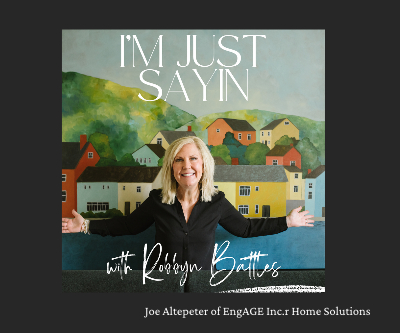
 You can walk through your parents’ house and check every box. The stairs are manageable, the yard is under control, the bedrooms are the right size. And you can still miss the one thing that will hurt them most. When I sat down with Joe Altepeter of EngAGE Inc., the CEO of a nonprofit that has spent 26 years building connection inside affordable senior housing, that gap is exactly what we dug into on my show, I’m Just Saying, Let’s Get to the Point.
I have spent nearly four decades guiding seniors and their families through home transitions, and I am a RealTrends Top 1% agent who specializes in exactly this kind of move. Over that time I learned that the logistics are rarely the hard part. What happens to a person living alone is the hard part. That is why this conversation mattered to me, and why I wanted to break it down for you here.
Here is what you will take away from this article:
- Why isolation, not the house itself, is the real threat to older adults
- What genuine community actually does for a senior’s health
- How intergenerational communities change both seniors and kids
- When to start the conversation with an aging parent, and how
- How I now screen for loneliness the way I screen for stairs
Check out the highlights here:
Why I Had This Conversation With Joe Altepeter of EngAGE Inc.

Most older adults want to stay in the home they know. That is a good instinct, and I respect it. But independence can quietly slide into something else, and that slide is where I have watched families get caught off guard. As Joe said in the podcast, the parts we usually worry about are the visible parts.
“As we’re thinking about our parents who are in the stage of, can they make it up and down the steps? Can they really take care of that yard? How many bedrooms does this house have? How are they cleaning? All of those things, but I think the most important thing to look at is their loneliness and isolation.” — Joe Altepeter, CEO of EngAGE Inc.
Joe is the CEO of EngAGE Inc., a nonprofit in its 26th year running arts, wellness, lifelong learning, and intergenerational programs inside affordable senior housing across Los Angeles Country and beyond. EngAGE does not own the buildings. Developers pay EngAGE to provide the resident services that keep people connected, which is the exact piece a house on its own can never offer. That distinction is what makes their work worth understanding before you make any decision about where a parent should live.
Watch the full conversation here:
}
Aging in Place Should Mean Living Well, Not Just Staying Put
The question I used to ask was simple. Can they manage the house? Joe pushed me to ask a harder one. Do they still have a reason to get up, and someone to see? Aging in place only works when the answer to that second question is yes.
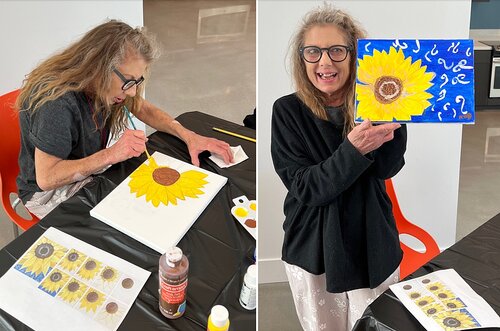
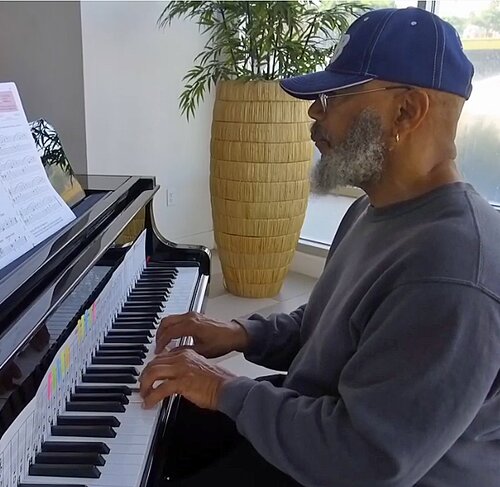
At EngAGE communities, an on-site program director is present multiple times a day, and programming runs roughly four out of every seven days.
- Arts and creativity, which studies tie to better mental health at every age
- Health and wellness, because staying on top of it matters more as we age
- Lifelong learning, including help with new technology
- Digital literacy and scam prevention, so seniors are protected online and by phone
The U.S. older population is growing quickly. According to the U.S. Census Bureau, 61.2 million Americans were age 65 or older in 2024, and earlier Census projections estimate that population will reach about 83.9 million by 2050.
For families and agents, the takeaway is practical. Weigh the social infrastructure of a place as heavily as you weigh bedrooms and bathrooms. A comparison makes it clearer.
| Staying Put Alone | Community-Supported Living |
|---|---|
| Growing loneliness and fewer visitors | Daily programming and regular contact |
| Reduced mobility over time | A reason to get up and move |
| Higher risk of cognitive decline | Learning, purpose, and connection |
| Isolation the house cannot fix | Built-in social infrastructure |
Once you see connection as part of the housing decision, the next EngAGE idea follows naturally. What happens when you put generations under one roof.
Why Intergenerational Communities Change Everyone in the Room
EngAGE runs a property called Mahonia Crossing in Salem, Oregon. It pairs a six-story senior building with two-story family units, shared gardens, playgrounds, and outdoor stair-seating where residents watch movies and theater together. As Joe described it in the episode, the design invites every age into the same space on purpose.
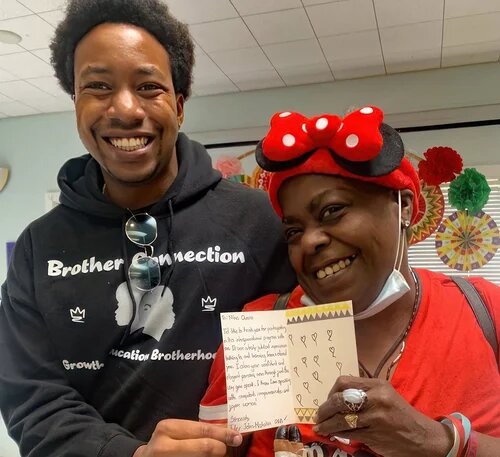
Their intergenerational work follows a three-tier model, and each tier goes a little deeper than the last:
- Shared low-stakes activities, like a barbecue or a movie night
- One group mentors the other on a project, seniors to youth or youth to seniors
- Seniors and youth collaborate as equals, building something together
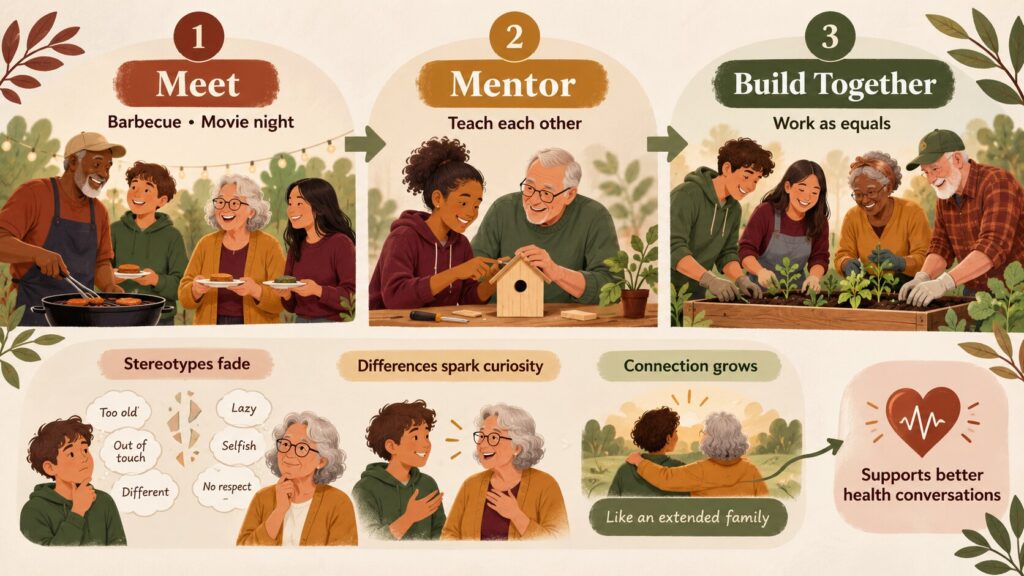
The payoff is that it dissolves the stereotypes each generation carries about the other. Kids stop being only noise from the playground. Seniors stop being only slow and tired. As Joe put it, when people share a room and start telling each other who they are, they get excited about the differences instead of guarding against them. It rebuilds the extended family that distance has taken from a lot of households. That thread of connection is exactly what carries into the health conversation.
The Social Prescriptions That Actually Keep Seniors Healthy
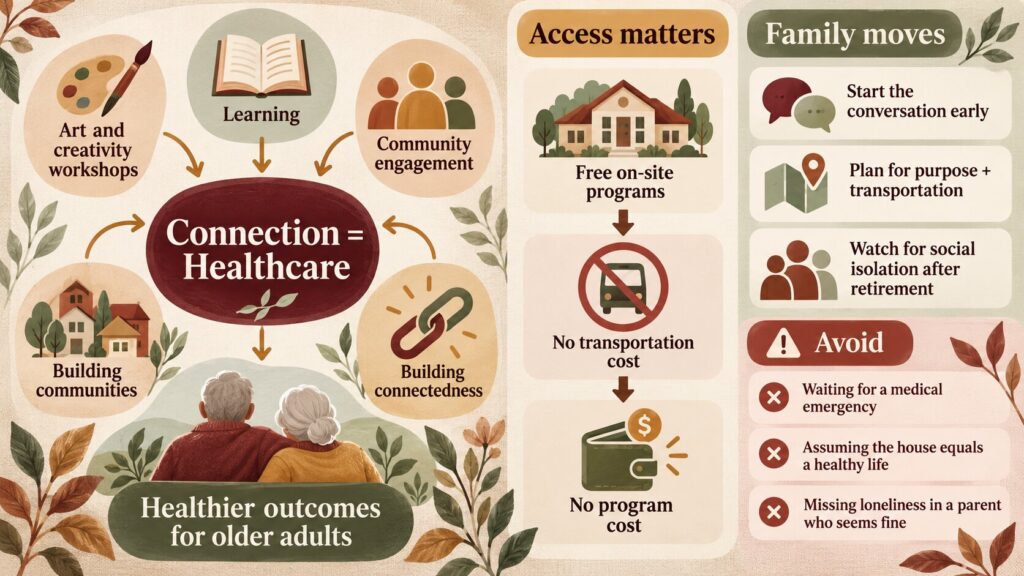
Here is the reframe that stuck with me. Treat connection as healthcare. The interventions that actually move health outcomes for older adults are also the most affordable ones, and Joe makes that case in his own words in this clip:
And there is one more piece he added that the clip does not capture. Because EngAGE provides these programs for free to every resident on-site, residents carry no transportation cost and no program cost to access them.
If you are the adult child in this picture, a few moves matter more than the rest:
- Start the conversation years early, while your parent is still healthy
- Plan for purpose and transportation, not only for care
- Watch for the parent whose entire social world was their coworkers
And a few mistakes are worth naming so you can avoid them. Waiting for a medical emergency to act. Assuming a paid-off, familiar house automatically equals a healthy life. Overlooking senior isolation and loneliness in a parent who seems fine because the house is fine.
What Changed for Me After This Conversation
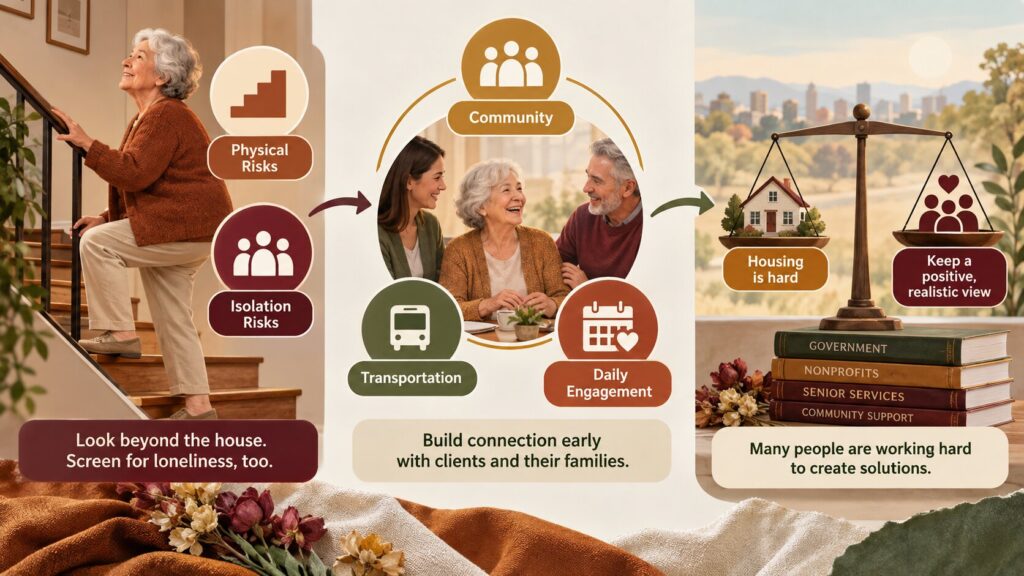
I now screen for isolation the way I screen for stairs. The house is the easy part. The loneliness is the risk. I used to ask how a senior ended up needing help. I have started asking how we build connection around a person before they do, which is a reframe Joe models when he asks how we failed someone rather than how they failed themselves.
In practice, that means I raise community, transportation, and daily engagement early with senior clients and their adult children. I keep a realistic view of how hard the housing math is, because it is hard, and I do not pretend otherwise. Joe holds that same balance.
“I just always for myself come back to understanding that the organizations that are doing this work, government folks too, they’re working super hard to get things done, and they’re working as hard as they can to approve building plans and what have you. But the organizations and nonprofits that are doing homeless services, senior services, housing for disabilities are doing really great work. And with that I have a positive perspective, without having those rose-colored glasses, understanding that there’s this other piece too.” — Joe Altepeter, CEO of EngAGE Inc.
If you are helping a parent decide whether to stay or move, that is the piece I would not skip. You can also follow Southern California real estate news and foothill market updates as you plan.
Frequently Asked Questions
What’s the biggest risk of aging in place without community support?
Isolation. When older adults stay home without regular social contact, independence can turn into loneliness, reduced mobility, and cognitive decline.
How does intergenerational housing help seniors and younger families?
It creates intentional chances for seniors and youth to mentor each other as equals, which breaks down age-related stereotypes and builds mutual respect.
When should families start talking with aging parents about senior living?
Years in advance, while parents are still healthy, so you can plan for purpose, transportation, and care instead of reacting to an emergency.
Keep the Conversation Going
If you want to support programs that help older adults and families build stronger, more connected communities, reach out to Joe Altepeter:
- Website → https://www.engageforlife.org/
- LinkedIn → https://www.linkedin.com/in/joe-altepeter-b8b79312/
- Facebook → https://www.facebook.com/engageforlife/
- Instagram → https://www.instagram.com/engageforlife/
And if something in this episode made you think, question, or even laugh out loud, let’s keep the momentum going together.
Follow me and stay part of the conversation:
- Website → https://www.thehouseagent.com/
- Facebook → https://www.facebook.com/RobbynBattlesTheHouseAgent
- Instagram → https://www.instagram.com/robbynbattles/
- LinkedIn → https://www.linkedin.com/in/robbynbattles/
And when you are ready to look at the housing side of aging in place, here are a few places to start:
- Weighing a move? Find out what your Pasadena or Montrose home is worth before you decide anything.
- Thinking about selling the family home? Here is how to sell your foothill community home with confidence.
- Helping a parent right-size or relocate closer to you? Explore buying a home in Pasadena and nearby foothill communities.
Apply to Be a Guest on “I’m Just Saying, Let’s Get to the Point” Podcast
My conversation with Joe was a reminder that the best insights often come from the people working quietly at the intersection of housing, health, and community. That is exactly the kind of voice I want on this show. If you work in real estate, senior services, lending, development, or any corner of this industry, and you are solving real problems for the people behind the transaction, I would love to hear your story.
Let’s get to the point together and spotlight the work you are doing.