

 Most families don’t start thinking about senior care until something forces them to. A fall. A diagnosis. A phone call that changes everything. By then, the best options are already gone – and the decisions land on adult children who are scrambling, grieving, and completely unprepared.
I sat down with Lindsay Friedman LTCareNav founder, on a recent episode of I’m Just Saying, Let’s Get to the Point to talk about how families can get ahead of this before the crisis happens.
What she shared was practical, eye-opening, and in some cases, completely new to me.
Here’s what you’ll take away from this article:
- How to assess where your family actually stands on care readiness
- How to monitor an aging parent at home without a camera
- Why making the plan now protects your autonomy – not just your wallet
Check out the full conversation here:
Step One: Run a Care Assessment Before You Think You Need One
One of the most useful things LTCareNav senior care planning offers is a six-question assessment that takes under a minute. It’s free. You don’t have to hand over personal data you’re not comfortable sharing.
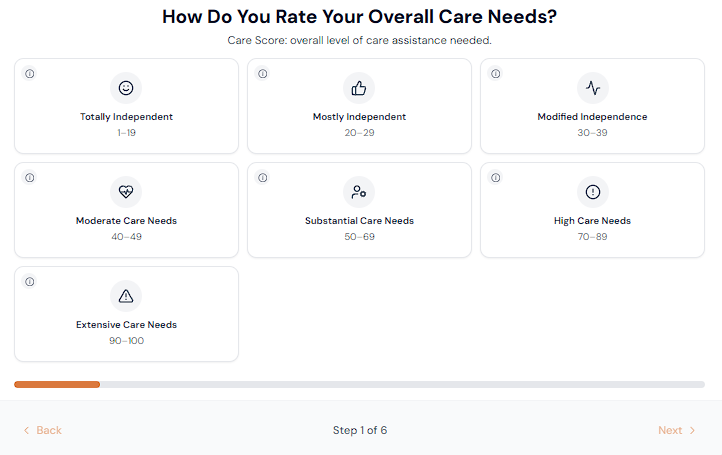
And at the end, you get a care score that tells you clearly where your family falls on the planning spectrum.
Lindsay told me that families who have used the assessment and paid thousands of dollars for a separate financial plan found the results matched almost identically. That’s not a small thing.
So start there.
Go to https://ltcarenav.com/ , answer the six questions, and find out where you actually stand.
Most people assume they have more time than they do. The assessment makes the picture concrete.
“We actually help families understand what kind of care they’re going to need as they age, what that care is going to cost, and explore ways of how to pay for that care.” – Lindsay Friedman, Founder of LTCareNav
The platform also builds a Care Concierge Team for you right at that point. You don’t have to dig further than you’re ready to. But when you are ready, the experts are already there – vetted by Lindsay personally through real conversations, not just intake forms.

She’s even launching a podcast series so families can watch those interviews and decide for themselves if a professional feels like a good fit.
Understand the Real Costs – Especially the One Nobody Plans For
When most people think about paying for senior care, they think about assisted living. What they often overlook is the step before it – and that’s where the financial surprise usually hits.
Home Care vs. Home Health Care: Not the Same Thing
Home health care – injections, wound care, IV treatment – is prescribed by a doctor and often covered by Medicare. Most families know this exists.
Home care is different.
It covers the daily things:
- Bathing
- Toileting
- Food prep
- Medication reminders
- Companionship.
And it is typically not covered.
The national average is around $30 per hour, paid out of pocket. But it really depends on where you live. According to research, here are the 10 most expensive states for home care.
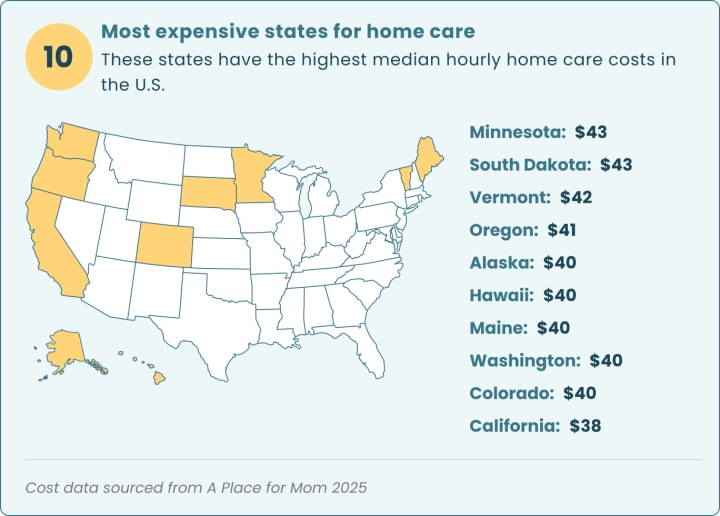
For a family that hasn’t planned for this, those hours add up fast.
The Full Spectrum of Care
| Level of Care | What It Covers | Typically Paid By |
|---|---|---|
| Home Health Care | Medical services prescribed by a doctor | Medicare (often) |
| Home Care | Daily tasks: bathing, meals, medications | Mostly out-of-pocket (~$30/hr) |
| Assisted Living | Residential care with daily support | Private pay; some Medicaid waivers; $6,313 per month. |
| Nursing Facility | Full-time skilled nursing care | Medicare/Medicaid by eligibility |
This is one of the core areas long term care planning for aging parents needs to address early – because the families who haven’t budgeted for home care are often the ones making rushed, expensive decisions later.
The Financial Tool Most Families Have Never Heard Of
Lindsay brought up funeral trusts midway through our conversation, and I stopped her – because I had genuinely never heard of this, and I’ve been in real estate long enough to have seen a lot of financial planning strategies.
Here’s how funeral trusts work: You set aside a designated amount – often around $15,000 depending on the state – specifically to cover funeral expenses such as:
- Professional funeral home fees
- Body preparation, embalming, and dressing
- Caskets, burial vaults, or urns
- Cemetery plot and interment fees
- Headstones and grave markers
- Officiant or clergy honorarium
- Service and support staff fees
- Death certificate copies
- Obituary publication
- Transportation costs

In many states, those funds are exempt from Medicaid’s look-back period.
That means a family preparing to transition onto Medicaid for care coverage can legally move that money into a funeral trust before applying – protecting it from being counted as an asset and ensuring that end-of-life costs are already handled. One less thing for a grieving family to figure out under pressure.
“There are a lot of tools in the financial world that you don’t think of or you’ve not heard of that can really help – that go beyond the idea of long-term care insurance.” – Lindsay Friedman, Founder of LTCareNav
Funeral trusts are just one example. The larger point Lindsay was making is that most families operate as if long-term care insurance is the only option – and it’s not.
A vetted financial planner who specializes in elder care opens up a range of strategies most people never explore. LTCareNav connects families to exactly those people.
Why Planning Early Protects Your Autonomy – Not Just Your Money
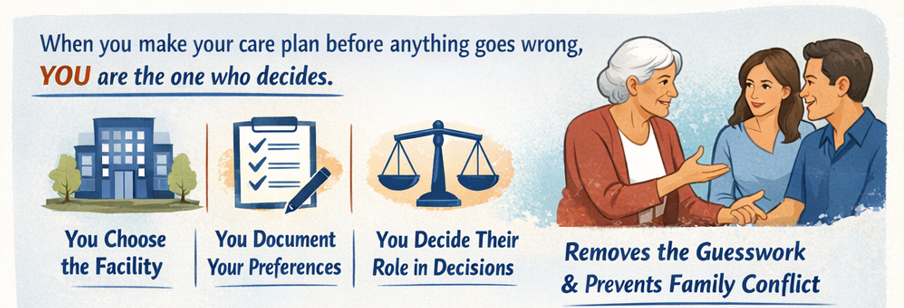
The most important argument Lindsay made for long term care planning before crisis isn’t financial. It’s personal.
When you make your care plan before anything goes wrong, you are the one who decides.
- You choose the facility.
- You document your preferences.
- You decide how much weight your children get in those decisions –
- And you decide how much you don’t want them carrying.
That plan removes the guesswork and removes the conflict.
Lindsay has seen siblings argue over things that would seem small from the outside – small things that become enormous under emotional pressure when no one knows what their parent actually wanted.
A documented plan ends that argument before it starts.

“When you make a plan, you are making these decisions. You’re going to have the autonomy. You’re going to tell your children. And it takes the burden off of them.” – Lindsay Friedman, Founder of LTCareNav
She also addressed something I hear from people all the time: the fear that planning means accepting that something bad is coming.
Lindsay reframes it well. Planning isn’t resignation – it’s control.
And for the Robbyn Battles podcast long term care audience specifically, many of you are already navigating aging parents and aging in-laws.
You know exactly what it feels like when there’s no plan. The goal is to make sure your kids never feel that.
How to Monitor an Aging Parent at Home Without a Camera
Near the end of our conversation, Lindsay introduced me to her second company, CareBloom – and it’s worth knowing about if you have a parent who insists on staying home.
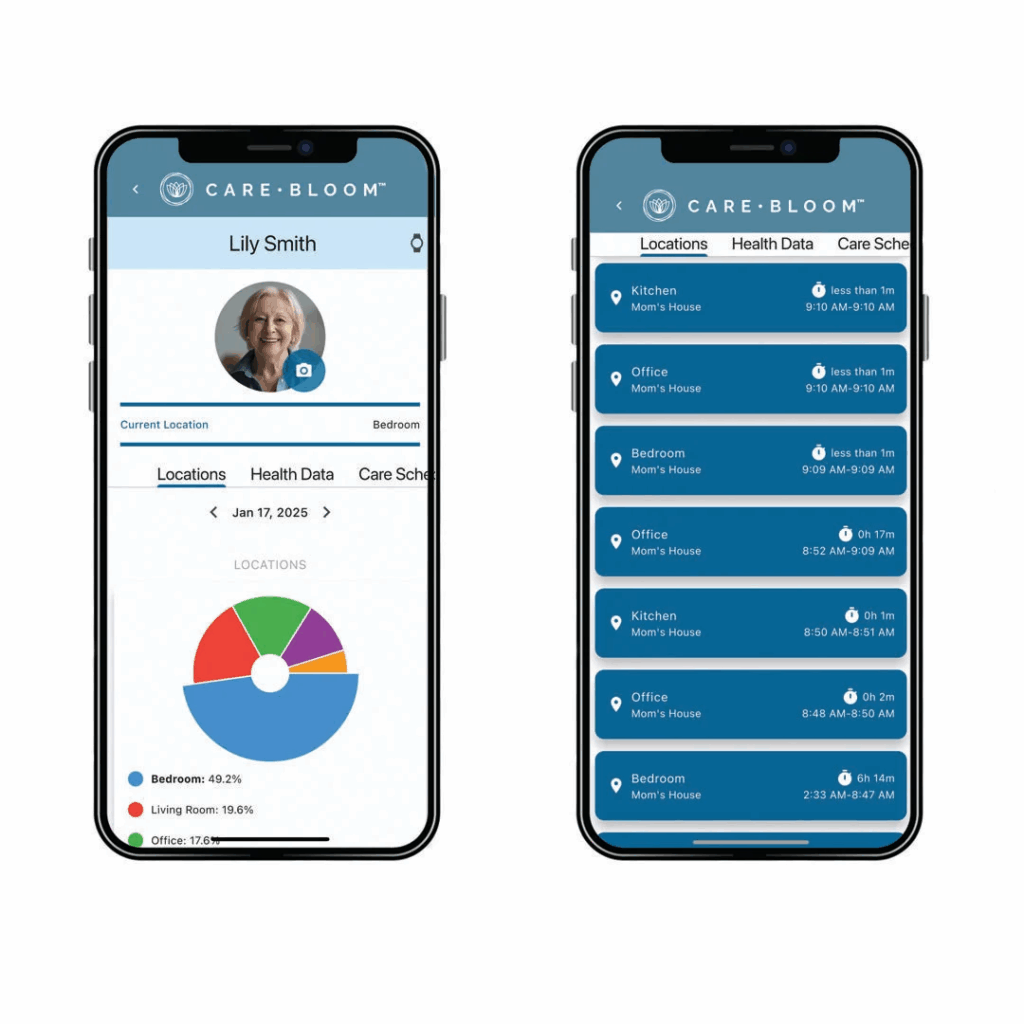
Here are some of CareBloom’s impressive features:
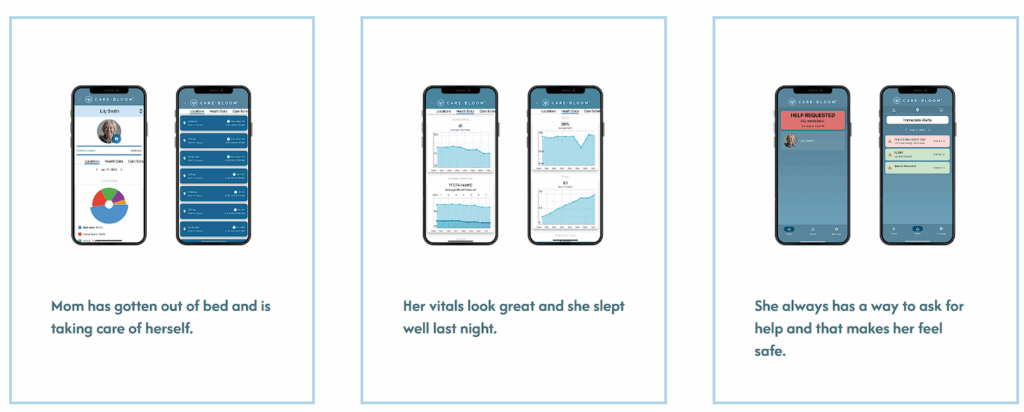
- Uses sensors and a smartwatch to monitor daily activity patterns without any cameras.
- It tracks whether your loved one got out of bed, ate, took their medication, showered.
- It flags behavior changes that could signal a health issue – giving families early warning before something becomes a crisis.
Lindsay confirmed that multiple people can be monitored simultaneously on the same system, which matters for couples aging in place together.
Families control which notifications they receive, so you’re not flooded with updates – just alerted to what actually matters.
Here’s an example of the alerts you’ll receive:
You can find out more at carebloom.com, and through ltcarenav.com/podcasts, Lindsay is currently offering 25% off per month.
Start the Conversation Before You Have To
Everything Lindsay and I talked about in this Robbyn Battles podcast long term care episode comes back to one thing: the families who fare best are the ones who didn’t wait. Not because they predicted every outcome, but because they made decisions while they still had options.
If this landed with you – go take the six-question assessment at ltcarenav.com. It’s free, it’s fast, and it gives you a real starting point. From there, Lindsay’s team connects you with the right people to help you build out the actual plan.
Frequently Asked Questions
What is long-term care planning?
Long term care planning before crisis means making decisions about future care – housing, finances, daily support – before health changes force the decision for you.
What does LTCareNav do?
LTCareNav senior care planning helps families assess their care situation for free, understand what different levels of care cost, and connect with vetted professionals who specialize in elder law, financial planning, and senior care.
When should families start planning for long-term care?
As early as your 40s or 50s, according to Lindsay. The earlier you start, the more tools are available to you – financially and logistically. Long term care planning for aging parents should ideally start before you notice any decline.
What is a funeral trust and how does it help with Medicaid planning?
A funeral trust lets families set aside funds specifically for funeral costs in a way that’s often exempt from Medicaid’s asset look-back period. This protects a designated amount from being counted against Medicaid eligibility – and ensures that expense is already covered.
Keep the Conversation Going
If you want clarity on long-term care planning before a crisis and access to vetted experts who can help you make confident decisions, connect with Lindsay Friedman at LTCareNav below:
- 🌐 Website → https://ltcarenav.com
- 👻 Facebook → https://www.facebook.com/LTCareNav
- 📸 Instagram → https://www.instagram.com/ltcarenav/
- 💼 LinkedIn → https://www.linkedin.com/in/lfriedman1
For real conversations that break down complex topics like real estate, aging, and life decisions into practical insights, follow Robbyn Battles and The House Agent platform.
- 🌐 Website → https://www.thehouseagent.com/
- 👻 Facebook → https://www.facebook.com/RobbynBattlesTheHouseAgent
- 📸 Instagram → https://www.instagram.com/robbynbattles/
- 💼 LinkedIn → https://www.linkedin.com/in/robbynbattles/
This podcast is produced by Icons of Real Estate – #1 Real Estate Podcast Network
Apply to Be a Guest on the I’m Just Saying Podcast
If you serve families navigating real-life decisions – through senior care, real estate, financial planning, or beyond – and you have insights worth sharing, let’s spotlight your work.