

 What if the biggest obstacle to building wealth was never the numbers, but the guilt?
Most people walk into a financial planner’s office assuming it’s about spreadsheets and stock picks. The real reason people stay for years usually comes down to something else. It comes down to finally feeling like their money isn’t something to be ashamed of.
That is the story behind Patrick Yaghoobians of Noor Financial Services, the Los Angeles fiduciary practice built on one simple rule: no guilt, just a plan. I spoke with Patrick on “I’m Just Saying” about his transition from wealth management associate to founder and ways to welcome Gen Z into an often-overlooked industry.
Curious about this episode? Here is a preview of our conversation on why Gen Z keeps getting left out of traditional financial planning.
From Wealth Management Burnout to Building Noor Financial Services
I spoke with Patrick Yaghoobians, whose story resonates with many listeners. After eight years in wealth management, he left last August to pursue his own path. Born in Canada, he moved to Los Angeles in 2009 during the Great Recession, witnessing his immigrant family face severe financial struggles. That memory shaped everything he does now as founder of Noor Financial Services.
The name itself carries meaning. Noor means light in Farsi and Arabic, and pomegranate in Armenian. Patrick built the brand around the idea that a financial plan is made of small seeds you plant and tend until they bloom into the life you actually want. It is a fitting metaphor for a planner who spent the TIAA Institute-GFLEC 2025 Personal Finance Index era watching Gen Z score lower on financial literacy than any other generation, and decided to do something about it instead of just talking about it.
Watch the full episode here:
Why Patrick Isn’t Chasing a Billion-Dollar Firm
Patrick is a CERTIFIED FINANCIAL PLANNER for young professionals, a member of NAPFA and XYPN, and Director of NexGen for the Financial Planning Association of Los Angeles. Working under the NAPFA Fiduciary Standard means he is required to put a client’s interests ahead of his own in every recommendation he makes, not just the ones that happen to line up with a sale.
Patrick’s goal isn’t a billion-dollar firm; he wants a few strong client relationships where clients share dog photos. This perspective is why I wanted to discuss it with anyone buying their first home, saving for a down payment, or tracking their spending.
If you want more on the numbers behind why so many first-time buyers feel stuck before they even start, I broke down the California Dream For All shared appreciation loan program for exactly that reason.
The Five Money Basics Patrick Teaches Every Client
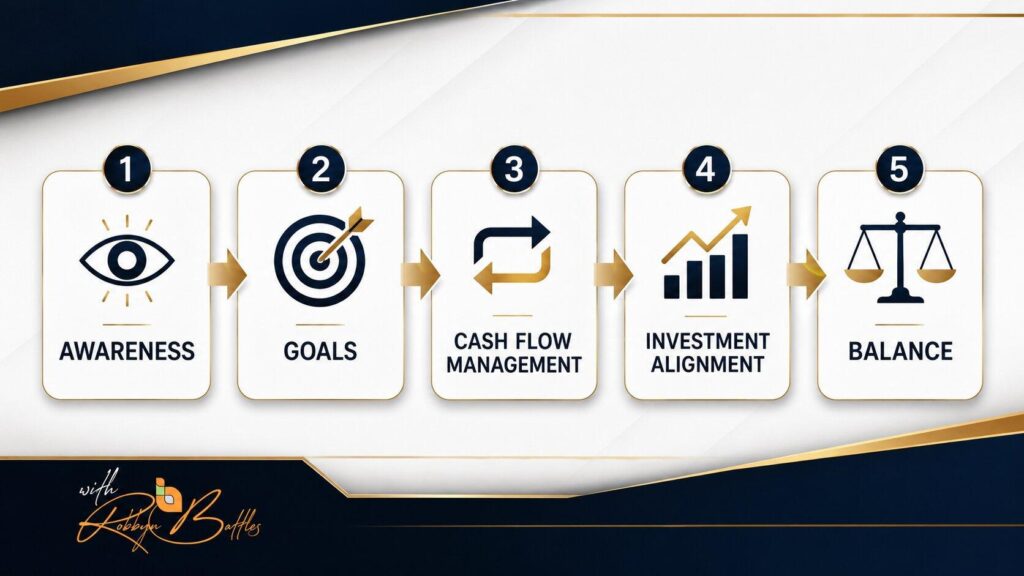
Patrick built his entire practice around five building blocks, and none of them start with cut your spending. The first is awareness. Our generation does not touch cash anymore. We tap a phone twenty times a day and rarely see where the money actually goes until we force ourselves to look.
The second is goals. Patrick pushes clients to get specific about what they are saving for, whether that is retirement, a first home, or a summer trip, because a vague goal never turns into a clear next step. This is exactly where I see so many buyers stall out in my own work, and it is part of why I wrote about achieving the dream of homeownership the same way Patrick talks about achieving a savings goal, one deliberate step at a time.
Third comes cash flow management, deciding on purpose where each dollar goes instead of watching it disappear into subscriptions. Fourth is making sure investments actually match the timeline of the goal. Money you need in three months has no business sitting in a single stock that could drop fifty percent before you need it. Fifth is balance, because Patrick refuses to tell clients to save, save, save and give up their present life for a future that is never guaranteed.
This matters more than most people realize. A recent Bank of America Better Money Habits study on Gen Z found that even with living costs squeezing this generation harder than any before it, most of them are still finding ways to save once they have a clear system to follow. That tracks exactly with what Patrick sees in his own practice.
Why Budgeting Should Never Feel Like a Crash Diet
This is where the conversation really opened up for me, because Patrick compares budgeting to dieting, and the comparison holds up better than I expected.
“If you read these studies about, let’s take a crash diet as an example, the 30-day, the 60-day diet where you’re just super restrictive for your body, the moment people get off these diets, they gain all the weight back and then some usually. And it’s kinda the same when it comes to spending. I won’t be surprised if you restrict people with their spending, and now you say, ‘Okay, we did it for two months, how do you feel?’ The next time the opportunity comes, they might feel like, ‘Well, I prevented myself from doing the things that I cared about for two months, and now I’m gonna come back and go all out because I didn’t get to do it for the past two months.'”
Patrick advises against strict budgeting, which can lead to rebound spending. Instead, he suggests using flexible monthly budgets that adapt over time. The focus is on creating a sustainable system that individuals can maintain long-term, applicable to both saving for a down payment and managing monthly dinner budgets. This approach embodies the concept of budgeting without burnout, encouraging sustainable financial habits.

Why Money Still Feels So Taboo to Talk About
I asked Patrick why it is still so hard to get Gen Z and millennials to open up about saving in the first place, and his answer stuck with me.
“If you ask most people, deep down they probably know they’re doing things that they shouldn’t, whether that’s with their money, with their health, smoking, drinking, anything you can think of. When you touch on something that’s such a sensitive topic, people feel a certain type of way, and my goal is to reduce the guilt, or remove the guilt, because I wanna come from an angle of, I understand where you’re coming from. I want you to feel like you’re not alone in this situation. I’ve gone through it, I’ve seen other people go through it, and I just want to break down that wall that people might have when it comes to talking about their money, because most families don’t talk about it.”
That is not a technical skill you learn in school. It is the entire reason people avoid financial planners in the first place, and closing that gap one client at a time is exactly what Patrick built his practice to do. He wrote about this same tension between finances and habit change on his own blog, comparing our finances and our diets in a piece worth reading in full, and it lines up perfectly with what he told me on the show.
How AI Fits Into Financial Planning Without Replacing the Advisor
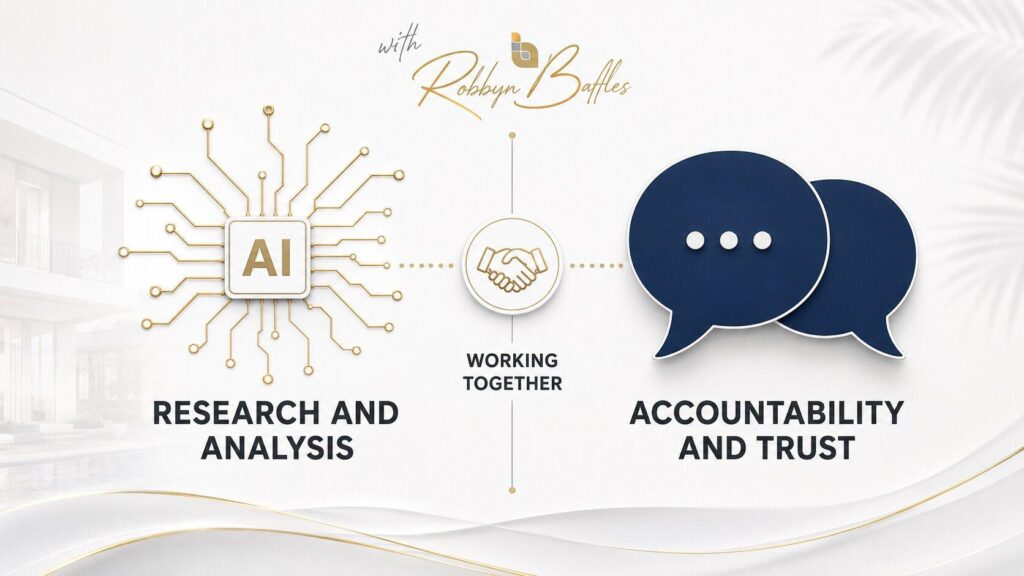
Patrick does not see AI as competition. He sees it as a research partner. He was upfront that a computer can probably build a better portfolio than most humans can, and he is not interested in pretending otherwise.
Where he sees his own value is somewhere else entirely. His expertise in the behavioral aspect of money alleviates his concerns about AI. While AI can present financial plans, the key advantage is in implementation, understanding, and having accountability, where human interaction excels. He views AI in financial planning as a partner for learning rather than a source for direct answers.
What Bigger Firms Taught Patrick About Building Real Relationships
Patrick worked at firms of every size before starting his own, from massive wire houses down to a six-person shop, and the difference that stuck with him was not technical at all. Some advisors he saw only met their clients once every two years. Others sent handwritten letters for holidays, hosted client appreciation events, and built relationships that blurred the line between client and friend.
That is the model Patrick chose for himself. He is not chasing scale. He is chasing a small group of people who feel comfortable enough to talk to him about their kids, their vacation plans, and yes, pictures of their dog.
If you are wondering whether that kind of personal attention holds up as your income grows, Patrick wrote about exactly that in a piece on why high earners still feel financially stuck even when they are doing everything right on paper.
He puts out this kind of practical, no-judgment content regularly, including a rundown of the seasonal expenses that quietly wreck a summer budget, and shares more of it through Noor Financial Services on Instagram.
How to Reach Patrick Yaghoobians of Noor Financial Services
Patrick stays active on Instagram and LinkedIn, putting out educational content whether or not someone ever becomes a client. His view is simple. You can absolutely learn to manage your own money, the same way you could learn to work on your own car.
But when you are ready for an accountability partner who helps you build the systems and actually stick to them, that is when it makes sense to look at Noor Financial Services’ planning options directly.
You can read more about his background and approach on the Noor Financial Services about page, or connect with him directly on LinkedIn.
I came away from this conversation thinking differently about how I talk money with the buyers and sellers I work with every day. Everybody starts with no money, even the people who eventually inherit some.
Whether you are a first-time buyer trying to figure out where your down payment is going to come from, or you are already a homeowner curious how large home ownership has shifted across generations, this is the kind of foundational thinking worth having in place before you ever sign a contract.
You can browse more of my ongoing real estate insights here, and you can follow me on Facebook, Instagram, and LinkedIn for more conversations like this one.
Want to hear my entire conversation with Patrick Yaghoobians and how he’s helping Gen Z build lasting financial habits without the guilt or burnout? Listen to our full podcast episode now.
FAQ
Who is Patrick Yaghoobians of Noor Financial Services?
Patrick Yaghoobians is a CERTIFIED FINANCIAL PLANNER and founder of Noor Financial Services in Los Angeles, focused on fiduciary financial planning for Gen Z.
What is Noor Financial Services?
Noor Financial Services in Los Angeles is a fiduciary financial planning practice built around personalized, judgment-free guidance for younger clients who traditional wealth management firms have historically overlooked.
What are the five money basics Patrick recommends?
Awareness of spending, clear goal setting, cash flow management, matching investments to your timeline, and balancing present enjoyment with future planning.
How does AI fit into Patrick’s approach to financial planning?
Patrick uses AI as a research and analysis tool, but keeps the human relationship, meaning accountability, implementation, and behavioral coaching, at the center of his practice.
Apply to Be a Podcast Guest
Stories like Patrick’s are exactly why I keep having these conversations. If you are actively working in real estate, finance, or a related field and solving real problems for real people, I would love to have you on the show.
Apply as a guest to share your insights. Whether your expertise is in establishing financial foundations or supporting major purchases, the goal is to help people make informed, guilt-free decisions. If that sounds like the work you do every day, I want to hear your story next.