

 The phrase “reverse mortgage” used to terrify people. My own mother had one. It was one of the best decisions she ever made. So I invited someone who could separate the myths from the math.
In this episode, I sat down with Janice Cohen of Mutual of Omaha Reverse Mortgage. to separate the myths from the math and show families how home equity can fund aging in place. She’s a former teacher turned exclusive reverse mortgage advisor with more than 20 years in the industry; she unpacks how the product works today.
The 2013 rule changes transformed its reputation. And the little-known reverse mortgage for purchase lets seniors buy a home with no monthly payment.
Curious about this conversation? Catch a quick preview in this snippet before you dive in:
From Classroom Teacher to Exclusive Reverse Mortgage Advisor
Janice was a teacher and a single mom when she walked into Wells Fargo in 2005 with zero mortgage experience. She was hired straight into the reverse division, became a top producer by her second year, and never looked back. After stops at MetLife, she has now spent 11 years with Mutual of Omaha, and every loan she closes comes from referral. She does not advertise or buy leads.
That teaching background is not a footnote. It is the whole point. As Janice put it during our conversation, people do not need to be sold on this product. They need to understand it. A good reverse mortgage advisor sits down, explains the process in plain language, and lets the senior decide when they feel comfortable. She shares that same educational approach with families every week through her reverse mortgage updates on LinkedIn.
That patience matters because the process itself demands it. Federally required counseling, an appraisal, and financial review all happen before anyone signs. Nobody gets rushed into this loan.
Watch the full episode here:
Why Seniors Really Choose a Reverse Mortgage
Nobody wakes up wanting a reverse mortgage. There is always a trigger, and in Southern California it is usually one of two things: the cost of in-home care or a retirement fund that cannot keep pace with the cost of living here. The Consumer Financial Protection Bureau’s reverse mortgage guides echo what Janice told me: this is a tool for solving a specific problem, not a lifestyle product.
“So two things. Number one, who’s doing a reverse mortgage? It’s generally people who want to stay in their home, and they either need to pay for care, which is very expensive, number one, or number two, they either are young-ish and do not have enough reverse mortgage advisor money set aside for a healthy retirement here in Southern California, which is such an expensive undertaking. That’s what’s gonna trigger them. There has to be a pain point. No one wakes up in the morning and says, ‘Ah, I’m gonna do a reverse mortgage today.’ I’m sure there have been people who’ve done or said that, but most people do this to solve for something. Paying for care, don’t have enough money put aside.”
Janice shared a case that shows how emotional this gets. A husband in his mid-90s with a terminal illness needs round-the-clock care. His wife’s daughter wants a reverse mortgage to keep him home for his final year. His children want the $1.6 million house sold so their inheritance stays untouched.
Here is what the kids are missing. Selling now triggers long-term capital gains taxes, assisted living runs roughly $12,000 a month, and the estate nets less either way. Run a net sheet before you dig in your heels, because the same math applies when heirs are eventually selling an inherited property. The family that keeps Dad home with the reverse mortgage often leaves more money on the table for everyone.
How 2013 Underwriting and the LISA Rebuilt Trust in Reverse Mortgages
For years, the biggest of the reverse mortgage myths was that the bank takes your home. Janice told me she rarely hears it anymore, and there is a concrete reason why. In 2013, the industry instituted financial assessment, meaning borrowers are now underwritten on income and payment history instead of, in her words, being lent money if they could fog a mirror.
Strong candidates show steady Social Security income and a clean record of paying property taxes and insurance. Borrowers with spotty payment histories get a built-in safety net instead of a denial.
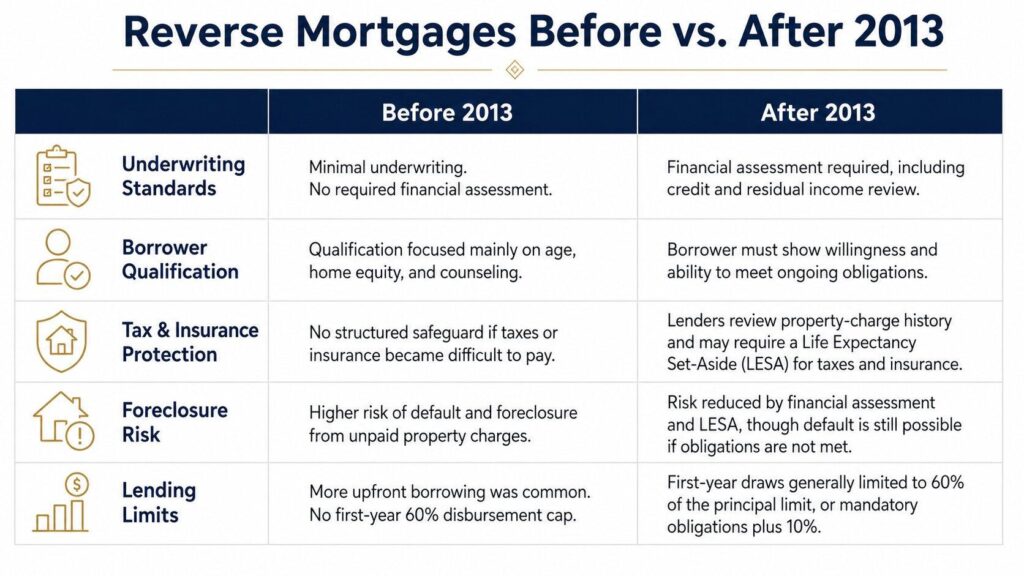
That safety net is the Life Expectancy Set Aside, or LISA. Say a borrower qualifies for $500,000. The lender carves out $40,000 calculated to age 100, uses it to pay property taxes and homeowners insurance on the borrower’s behalf, and issues the remaining $460,000 as a line of credit. The house stays current no matter what.
The result is that foreclosures have nearly disappeared from the picture. These standards now apply industry-wide under the FHA-insured home equity conversion mortgage (HECM) program, and you can read the federal framework on HUD’s reverse mortgage program page for seniors. Janice walks clients through the specific reverse mortgage products available through Mutual of Omaha, from lines of credit to jumbo options for higher-value homes.
The Reverse Mortgage for Purchase Strategy Most Agents Overlook
Everyone has heard of the reverse mortgage. Almost nobody talks about the reverse mortgage for purchase, and it might be the most useful tool in the box for senior buyers.
Janice’s example floored me. A Pasadena couple sells their $2 million home and nets about $1.5 million after payoff, closing costs, and taxes. They hand $1 million to a financial planner for lifetime income, keep $500,000, and want to buy again. On Social Security alone, no forward lender will touch them.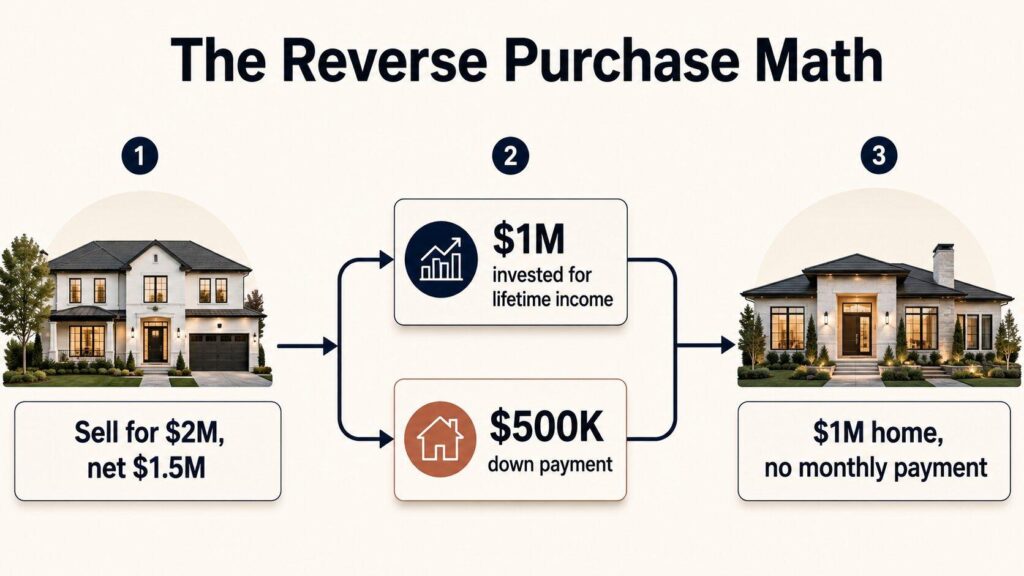
This is the exact scenario where agents give up on senior buyers too early. Janice does not.
“And you’ll say there, I’m not gonna be able to find something that you’re gonna love for $500,000. You know, and you know in your heart, and you know because you’ve already checked, they’re not gonna qualify for a sizable mortgage. What we can do is we can say, ‘Okay, Mr. and Mrs. Jones, you’re gonna put down 500,000. We will finance the balance of the purchase of a $1 million home, and you will have a reverse mortgage on that home, upon which you will have no payments required. You’ll have to pay your property taxes and homeowner’s insurance and HOA fees, but other than that, you have no payments to make. So you will be in a position of living in a $1 million home, and living as though you purchased your home for cash, which you did.”
Stack up the wins. They keep an equity position, they earn income off the invested million, they carry their Prop 13 tax base to the new home, and they have no house payment for life. If you are wondering how this structure works for your own clients, the details on buying a home with a reverse mortgage spell out the down payment and eligibility rules.
The Senior Housing Shortage Keeping Downsizers Stuck
So why is the reverse mortgage for purchase thriving in La Quinta, Palm Springs, and Palm Desert but barely discussed in LA County? Inventory. When a small one-story home in Arcadia or Monrovia sells, builders tear it down and put up a two-story family house. Nobody is building for the downsizer.
The tax code makes it worse. The home sale exclusion has sat at $250,000 per person since the 1990s, and the IRS rules on excluding gain from a home sale have not kept pace with California prices. A senior who bought in the 1970s, like Janice’s Beverly Hills client whose $200,000 purchase appraised at $9.1 million, faces a staggering tax bill just for moving. Meanwhile, a temporary bright spot worth knowing about is the new Senior Bonus Deduction for homeowners 65 and older, which can trim taxable income through 2028.
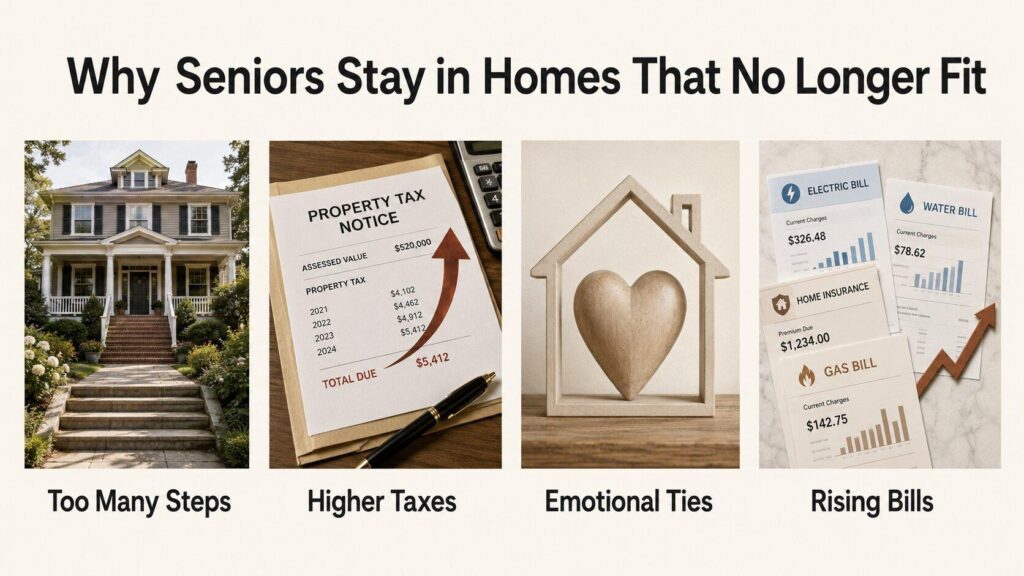
So they stay. They move the bed downstairs in the San Marino house they cannot navigate, and they absorb utility bills and FAIR Plan insurance premiums that keep climbing. Janice and I half-joked about building “senior land,” but the serious version already exists in pockets. Lennar’s Tesoro community in Santa Clarita delivered one of her clients a brand-new single-story patio home, and new lot-split laws could open the door to small senior-friendly homes in the neighborhoods people actually want to stay near. More inventory like that would make aging in place a choice rather than a default.
The One Question Every Senior Should Answer First
When I asked Janice what actually holds people back, her answer had nothing to do with rates or fees. It was fit.
“Is this really gonna be my final home? Because I strongly urge people to do this in their final home, where they wanna live for the rest of their lives. I would never wanna see somebody who lives in a three-story townhouse, and they’re 75 years old, and there’s no way to put in an elevator. Not a great application of the reverse mortgage. But they have a single-story home in Westlake Village or in Encino? Great. Let’s do it, all day long.”
That reframed how I talk to my own senior clients. The first question is no longer whether the numbers work. It is whether this house works for the next twenty years.
Condition is part of that answer. The HECM appraisal flags health and safety issues, from broken windows to a failing roof, and repairs can be paid through the loan itself. Janice recently helped two sisters in North Hollywood fund a new roof with loan proceeds right as their insurer’s drone flyover demanded one. Deferred maintenance snowballs fast, which is the same warning I give sellers in my rundown of home selling mistakes to avoid. Water damage alone can cascade into mold, electrical hazards, and repairs that cost multiples of the original fix.
I share stories like these regularly with my community on Facebook and Instagram, because the earlier families have this conversation, the more options they keep.
Curious about this episode? Want to hear my entire conversation with Janice Cohen of Mutual of Omaha Reverse Mortgage as she breaks down how reverse mortgages actually work, why the 2013 rule changes transformed the product, and how seniors can buy a home with no monthly payment? Listen to our podcast episode!
Frequently Asked Questions
Is a reverse mortgage still risky for seniors?
Far less than its reputation suggests. Since 2013, financial assessment screens borrowers, the LISA guarantees taxes and insurance get paid, and every home equity conversion mortgage requires HUD-approved counseling before closing. The remaining risk is fit, which is why the final-home question comes first.
Can you buy a house with a reverse mortgage?
Yes. The reverse mortgage for purchase lets buyers 62 and older combine a substantial down payment with reverse financing and carry no required monthly payment. Property taxes, homeowners insurance, and HOA fees still apply, and running the numbers through reverse mortgage and retirement planning calculators is a smart first step.
How do I contact Janice Cohen of Mutual of Omaha Reverse Mortgage?
Call her toll-free at 888-740-9573 or visit her reverse mortgage website, where you can explore whether this path fits your retirement. You can also follow her senior lending education on Facebook. Whether you are planning for care costs or simply want to stay in the home you love, Janice Cohen of Mutual of Omaha Reverse Mortgage starts with understanding, not a sales pitch, and that makes all the difference for aging in place.
Apply As A Guest on the I’m Just Saying Podcast
Senior homeowners are facing decisions their parents never had to make, and the professionals who serve them are evolving just as fast. If you are a real estate agent, lender, advisor, or specialist with real stories and real solutions, I would love to hear from you. Apply as a guest now and join the conversation.