

 Gravity never takes a day off, and neither does the question of what happens to a person’s independence once a doctor says therapy is done.
A parent comes home from the hospital with a photocopied sheet of exercises. Insurance paid for what it calls medically necessary, and medically necessary turned out to mean twenty feet with a walker. I hear that story from families constantly, usually right before somebody says the word sell.
On this episode of I’m Just Sayin, I talk with Tiffany Piquilloud of Challenge Center, a San Diego nonprofit that picks up exactly where insurance quits.
Curious about this conversation? Check out the snippet below before we get into it.
What Happens When Insurance Decides You Are Done Healing
I have spent more than 38 years helping families through senior home transitions, trust sales, and inherited property. I hear a version of this story constantly. Insurance follows Medicare’s rule that treatment has to be medically necessary, and the CDC reports that more than one in four adults over 65 falls each year, which means this is not a rare situation. It is the situation.
That gap between what insurance considers finished and what a person actually needs is exactly what I explored in my recent conversation about the moment families wait too long to have. Tiffany Piquilloud has run Challenge Center for 23 years, offering physical therapy after insurance runs out through a nonprofit clinic and adaptive gym in San Diego.
Watch the full episode here.
How Six Months of Rehab Became Six Weeks
When Tiffany graduated 33 years ago, a quadriplegic patient typically received six months of inpatient rehab. Now it is six weeks, and patients go home at a much lower level of function. The care shifted from inpatient to outpatient, but the outpatient limits never expanded to match.
Medicare backs this up. For 2026, outpatient therapy claims above a set dollar threshold require extra documentation just to keep going, which is the bureaucratic version of what Tiffany described as hitting a plateau. Most private insurance caps patients at 12 to 24 visits, period, whether that covers a full recovery or not.
Challenge Center’s physical therapy program exists because that ceiling was never really about healing. It was about a calendar.
Where Care Picks Up After Insurance Stops
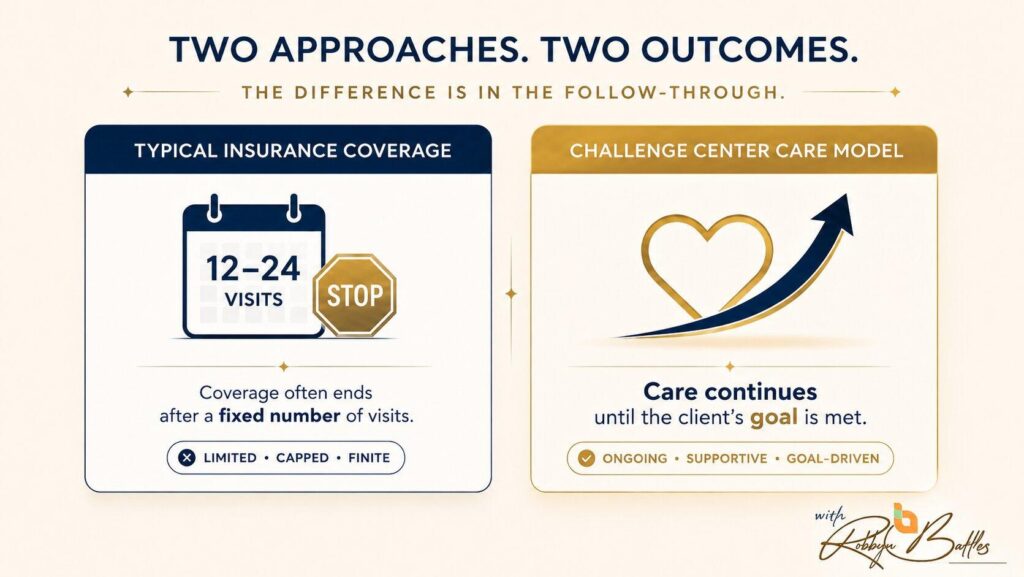
Challenge Center funds up to 80 percent of a low-income client’s care through grants and fundraising. Nobody comes for free, because Tiffany found that when care is free, people stop showing up.
“So if somebody has their 12 or 24 visits or they have Medicare and it’s, you know, they reached medically necessary goals and their physical therapist has discharged them, sometimes they get insurance-covered therapy ends because you run out a number of visits, you run out to a dollar limit, or you’ve reached all of the reasonable and medically necessary goals as Medicare calls them. Or they’ll say, well, listen, you’ve hit a plateau, right? This is about what you’re going to get, but if you go home and keep doing it, I’m going to hand you a pamphlet of exercises, and if you go home and you keep doing them, then hopefully you’ll see some progress.”
I see families start looking at a parent’s house differently the moment they hear that pamphlet line. A plateau from a therapist is not the same thing as a ceiling on what a person can still recover. Families I have worked with, including several I connected with a senior move manager, often discover this too late in the process.
Challenge Center tracks its outcomes closely, and the results the organization reports back up what Tiffany described on the podcast.
The Teenager Walking Across the Gym

A 16-year-old with a spinal cord injury came to Challenge Center after doctors told him walking was not going to happen for him. A few months in, he is taking steps across the gym.
Only 8 percent of gyms in the country have any accessible equipment at all, which is part of why Tiffany built her own space around specialized electrical stimulation bikes that let paralyzed muscles pedal and contract, even without a working connection to the brain. That gap is exactly why adaptive fitness for people with disabilities matters so much more than a nice-to-have amenity.
The financial case matters here too. The National Council on Aging projects the cost of treating fall- and mobility-related injuries will exceed 101 billion dollars nationally by 2030, a number that only grows when people lose independence they could have kept.
A client with a spinal cord injury and three young daughters could not dress herself or get in and out of her chair when she was discharged. Years later, she drives her kids to school and cares for her grandchildren part time. Anyone weighing whether a parent is ready to be a guest speaker at Challenge Center’s enrollment intake should hear that story first.
Learning to Fall Before You Need To
Tiffany’s agility class starts from a blunt fact. Gravity is not going anywhere, and anyone with any quality of life is eventually going to fall. Fall prevention for seniors usually stops at picking up throw rugs. Tiffany takes it much further.
“So we then have these 8-inch-thick crash mats. They’re 8-inch-thick, 4 by 4 mats, and we teach people how to fall, and we start from their bottom, and they just learn how to turn into a wheel and roll without their head going back, right. And then we go to their knees, and we teach them how to fall on their squishy bits and fall on the corners and not put their arms out. People try to catch themselves and stop the fall, but that’s too much force. And that’s how women always end up breaking their wrists when they try to do that, or their elbows give way, and they break their face.”
Ninety-six percent of clients who take that class reduce their risk of falls. Not by avoiding falling, but by learning how to do it without breaking something. I think about this every time a client tells me about a reverse mortgage helping their parent stay home longer, because staying home safely and staying home period are two different conversations. Challenge Center’s balance and agility classes treat that difference as the whole point.
Why I Think Twice Before I Recommend Downsizing Now
“I think we still are trying to convince people that if seniors lift weights, they’ll get stronger, but of course they do, and they need to do heavy lifting and do these hard things. That’s the only thing that’s ever changed anyone’s body, right? But if you have low expectations and you think seniors have low expectations for themselves, then you think you’re doing a little weight and not even standing up, well, that’s better than nothing; it’s good enough.”
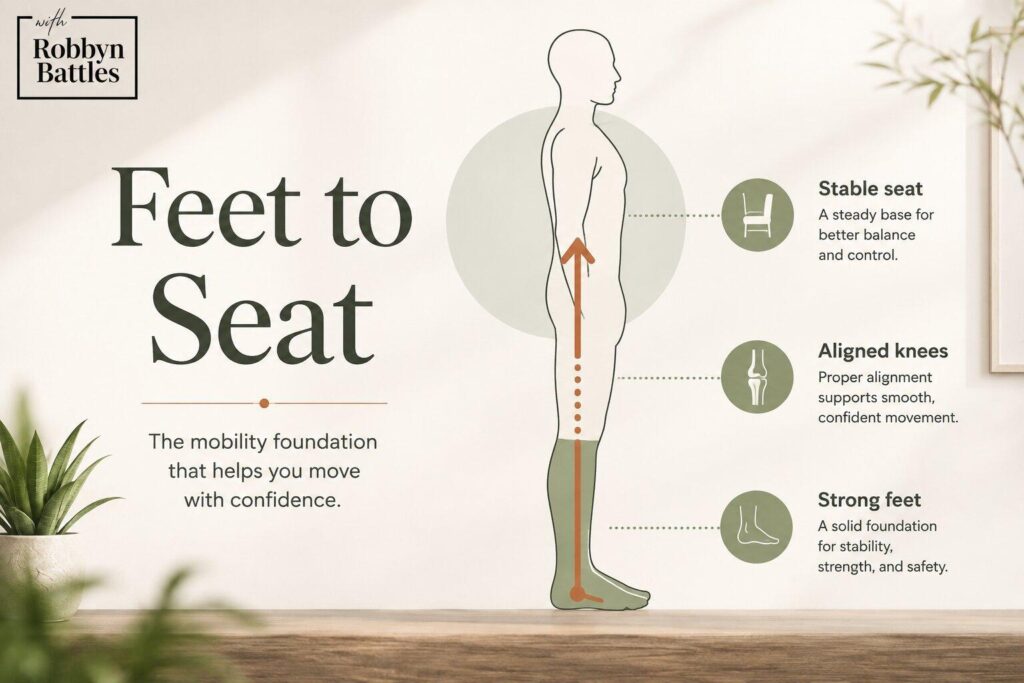
Tiffany calls this ageism, and once she named it, I could not stop seeing it. She put it simply. It’s feet to seat. If someone’s feet are not strong and aligned, everything above them is compromised, just as a building needs a level foundation before anything else works.
Most people over 50 want to stay in the home they already have. AARP’s most recent national survey found that three-quarters of adults 50 and older want to remain in their current home as they age, and mobility is usually the deciding factor in whether that is realistic. I have watched two very different retiring couples wrestle with this exact question, and their circumstances taught me how differently unique seller questions can play out even when the underlying issue is the same.
This changed how I approach conversations with families weighing a move. Before I ask what a house is worth, I now ask what the person living in it is still capable of, and whether that answer might be different in six months with the right support. That is the real value Tiffany Piquilloud of Challenge Center brings to every family navigating this stage.
You can find more from Tiffany and Challenge Center on Instagram and Facebook. You can also follow along with my own work on Facebook, Instagram, and LinkedIn.
Want to hear my entire conversation with Tiffany Piquilloud of Challenge Center about what happens when insurance stops paying for physical therapy and how seniors and people with disabilities keep moving forward? Listen to our podcast episode!
FAQ Section
How many physical therapy visits does insurance actually cover?
Most private insurance plans limit patients to 12 to 24 physical therapy visits per injury or per year, and Medicare requires that treatment be classified as medically necessary before it continues past a set spending threshold.
What happens after physical therapy insurance runs out?
Nonprofits like Challenge Center pick up care after insurance stops, covering up to 80 percent of a low-income client’s cost on a sliding scale until the client’s own goals, not the insurer’s, are met. This is what a true accessible gym in San Diego looks like in practice.
Can someone told they will never walk again actually recover mobility?
Tiffany Piquilloud’s clients have regained mobility years after being told walking was not an option, through specialized equipment and consistent care built around spinal cord injury recovery.
Apply to Be a Guest on the I’m Just Sayin Podcast
Tiffany taught me that recovery does not end when insurance says it does, and I have learned that a home sale should not start until we know what someone is truly capable of. Between her work rebuilding independence and mine helping families plan their next move, we both spend our days proving that a plateau is never the final word.
Real estate touches every part of a family’s life, including the parts nobody plans for. If you work with seniors, caregivers, or families navigating a health transition and you have real stories worth sharing, I would love to have you on.